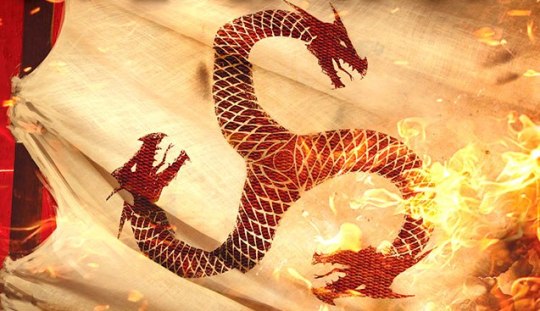
You know things are about to slow down and get a good deal more complex when you have an entire chapter devoted to one out of the three hundred years of the Targaryen dynasty…
“a group of formidable Stark wives, widows, mothers, and grandmothers that I dubbed ‘the She-Wolves“
Based on the timeline, we can work out who most of them are:
Larra Royce, wife/widow of Lord Beron Stark, mother of Donnor, Willam, Artos, Berena, Alysanne, Errold, and Rodrik.
Myriam Manderly, widow of Lord Rodwell Stark (Beron’s older brother), no issue.
Alys Karstark, widow of Lord Brandon, mother of Lord Beron and Lord Rodwell.
Those are the three I’m most sure about. However, we know the She-Wolves were five in total, so there’s room for two others, and there’s a bunch of possible candidates to fill those slots:
Arrana Stark, daughter of Edric and Serena Stark, wife to Osric Umber, who has kids AND/OR Aregelle Stark, daughter of Edric and Serena Stark, wife to Robart Cerwyn. Either or both would be an interesting pick, because they both have issue, and they represent competing succession claims: Edric Stark was the third son of Cregan, whereas Beron and Rodwell succeeded from Brandon, who was the youngest of Cregan’s sons; moreover, Serena Stark was the daughter of Rickon Stark, Cregan’s oldest son (and was married to Edric to reconcile the claims). So they could plausibly argue that their claim is better than that of Beron and Rodwell and their heirs.
Serena Stark, if she’s still around, would probably want her line to regan the lordship that was lost to them when Rickon’s daughters were passed over in favor of his half-brothers. (Which does sort of muddy the “In the north the children of a man’s body still come before his uncles, ser.“ thing from Jon IV of ADWD.)
Wylla Fenn, highborn mistress of Lord Brandon Stark and mother of Lonnel Snow, the last surviving son of Lord Brandon’s body.
Am I forgetting any? This period of Stark history is tangled indeed.
Fire & Blood Vol. I does not stint for material on Jaehaerys I – no less than eight chapters, almost three hundred pages, focus on his reign – which means that it is not going to be possible to cover this monarch in one chapter. And since almost all of this is new material, I’m going to go chapter-by-chapter.
Which is not much of a sacrifice, because this is the strongest material in the book,…
Here’s my plan with Fire and Blood, Volume I. This book is a bit of a tricky combination of stuff that’s taken word-for-word from previous texts (WOIAF, Sons of the Dragon, etc.), completely new stuff, and stuff that was in previous texts but has since been expanded.
In each post then, I will just link to where I wrote about the word-for-word stuff when the previous book came out, then continue…
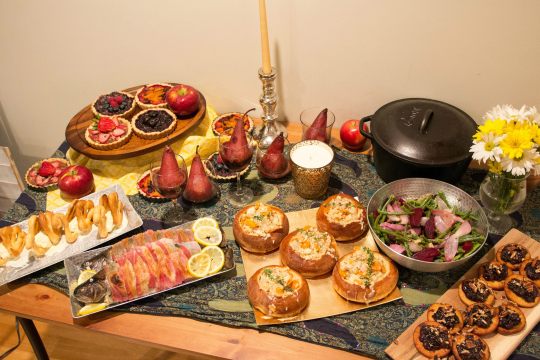
Well, Westeros leans more to harvest festivals than “Thanksgiving,” but I would imagine neeps (and probably parsnips too, based on English Christmas meals I’ve had where the potato and yam are less represented than in the U.S) are pretty heavily represented as a starchy side-dish, since potatoes don’t exist in Westeros (nor do any New World crops).
However, we don’t have to guess, since we have an example of a Northern harvest feast from Bran III of ACOK:
Such food Bran had never seen; course after course after course, so much that he could not manage more than a bite or two of each dish. There were great joints of aurochs roasted with leeks, venison pies chunky with carrots, bacon, and mushrooms, mutton chops sauced in honey and cloves, savory duck, peppered boar, goose, skewers of pigeon and capon, beef-and-barley stew, cold fruit soup. Lord Wyman had brought twenty casks of fish from White Harbor packed in salt and seaweed; whitefish and winkles, crabs and mussels, clams, herring, cod, salmon, lobster and lampreys. There was black bread and honeycakes and oaten biscuits; there were turnips and pease and beets, beans and squash and huge red onions; there were baked apples and berry tarts and pears poached in strongwine. Wheels of white cheese were set at every table, above and below the salt, and flagons of hot spice wine and chilled autumn ale were passed up and down the tables.
…The serving men brought every dish to Bran first, that he might take the lord’s portion if he chose. By the time they reached the ducks, he could eat no more. After that he nodded approval at each course in turn, and waved it away. If the dish smelled especially choice, he would send it to one of the lords on the dais, a gesture of friendship and favor that Maester Luwin told him he must make. He sent some salmon down to poor sad Lady Hornwood, the boar to the boisterous Umbers, a dish of goose-in-berries to Cley Cerwyn, and a huge lobster to Joseth the master of horse, who was neither lord nor guest, but had seen to Dancer’s training and made it possible for Bran to ride. He sent sweets to Hodor and Old Nan as well, for no reason but he loved them. Ser Rodrik reminded him to send something to his foster brothers, so he sent Little Walder some boiled beets and Big Walder the buttered turnips.
So if we look at the menu, you’ll notice that the meats tend towards game animals – aurochs, venison, duck, fish, pigeon, boar – although there are some stock animals like beef and mutton and poultry as well, which points to the necessity of trying to keep as much of the livestock alive through the winter as possible so that you can continue to get eggs, milk, cheese, and wool off of them.
As far as starches go, in addition to the trenchers which serve as plate and bread at the same time, you have black bread and oaten biscuits, which speaks to the northern climate where hardier grains like oats and rye do better than more fragile wheat. There’s a lot of starchy veg as well, with leeks, turnips/neeps, (parsnips don’t show up here but they do in other feasts), etc. “Pease” refers to pease porridge, which is usually made with bacon or ham as well as carrots, onions, turnips, and various spices.
Also as you might expect from a harvest meal, there’s a lot of seasonal fruits, both used as sauces and served on their own, and it’s all richly spiced both for flavor and as a preservative b/c food cannot be wasted.
So my initial plan is to do a chapter-by-chapter of Fire and Blood, although it’ll probably be in bullet point form similar to what I did with WOIAF.
Then, I was planning to do an update on some of my essay series, similar to how I wrote a followup essay about “Hollow Crowns and Deadly Thrones” after WOIAF.
At the moment, I don’t have any definite plans for which essay series to revisit: obviously, the “Hollow Crowns” series is most likely, but whether I’ll do the “Hands of the King” or “Laboratory of Politics” depends on what kind of material there is in Fire & Blood Volume 1.
This is one of my major pet peeves in ASOIAF fandom. I’ve talked about it here and here and here and here, but I’ll repeat myself here: Westeros is not in medieval stasis.
Rather, what we have is a story of technological change from the Paleolithic through the Neolithic through the Bronze Age through the Iron Age through the Early, High, and Late Middle Ages, with the Free Cities sitting firmly in the Renaissance.
The reason why we think there’s medieval stasis is that Westerosi historians, much like medieval chroniclers, have re-interpreted pre-medieval history in medieval terms, so that warriors become knights, chieftains become kings, and gods become heroes.
My guess is that you probably have the three male gods on one side and the three female gods on the other, and the entryway is the Stranger (symbolizing the whole death and rebirth thing).
In terms of ordering, I would guess that if the bottom side is the door/Stranger, and then going around the room on the right hand side, it probably goes Smith, Warrior, Father, Mother, Maiden, Crone.
Thus, symbolically, the Smith and the Crone are in the back (because who cares about peasants and old women), the Warrior faces the Maiden he’s supposed to protect, and the Father and Mother are side-by-side.
In Westeros, a confessor seems to have a grislier, secular purpose:
The entrance to the dungeons proper was at ground level, behind a door of hammered iron and a second of splintery grey wood. On the floors between were rooms set aside for the use of the Chief Gaoler, the Lord Confessor, and the King’s Justice.
And for that task, Ser Ilyn Payne was singularly ill suited. As he could neither read, nor write, nor speak, Ser Ilyn had left the running of the dungeons to his underlings, such as they were. The realm had not had a Lord Confessor since the second Daeron, however…
The girls became handmaids to Princess Rhaenyra, whilst their elder brother, Ser Harwin Strong, called Breakbones, was made a captain in the gold cloaks. The younger boy, Larys the Clubfoot, joined the king’s confessors.
My reading of the above text is that The Lord Confessor was in charge of torturing prisoners in the royal dungeons, to elicit confessions. Which fits Larys’ track record as a pragmatic, if not ruthless, politician.
If Tywin died suddenly before AGOT starts, who would inherit Casterly Rock? Jaimie is out, so would it go to Tyrion or Kevan?
ravenking1771 said:Hey there I saw the recent question about the Casterly Rock inheritance and I wanted to know how firmly did the medieval aristocracy adhere to inheritance I.e. Tyrion is Tywin eldest eligible make child and thus from a legal perspective his heir but Tywin does not consider him and if Tywin died before the events of the novel Tyrion would no doubt be challenged if not passed over by his family, so I wanted know how firmly did these governments respect inheritance rights?
Since I’ve gotten a couple questions about this, I figure I should probably consolidate them into one response rather than repeat myself. It depends on what Tywin set out in his will, and the balance of political power when it comes to both the claimants and whoever might enforce and/or recognize the validity of the will.
Certainly, Tyrion would have a very strong claim under Westerosi law; he is the oldest eligible male child of the deceased, and he had done nothing that would make him ineligible (like joining the Night’s Watch or the Citadel or the Faith).
However, whoever Tywin named in the will would also have a claim, and that claim would be buttressed by that person’s own lineage – if it’s Cersei, proximity would no doubt be stressed as well as the will; if it’s Kevan, then he’d be pointing to being the son of Tytos as well as Tywin’s brother as well as the wil. And so on.
But the balance of power is important: if Tywin dies pre-AGOT, Cersei is going to lobby for her own line (whether for herself or one of her children), and Robert might give in or he might give it to Tyrion out of spite, or he might want to give it to Kevan b/c Kevan fits his mental model of a strong Warden of the West (in the same way that he didn’t want a sickly boy to hold the Wardenship of the East). At the same time, Jon Arryn’s wishes would play a large role in that situation; he’s more of a traditionalist, so he might want it to go to Tyrion because Andal law says so and wills that go against the law lead to civil war and disorder.
If Tywin dies pre-Purple Wedding, it depends when exactly. If it’s after the Battle of Blackwater, Cersei is Regent and Tyrion has lost his handship, so he’s at a disadvantage. If it’s before the Battle of Blackwater, Tyrion has a significant advantage.
However, a lot would depend on how the Lannister lords at the Rock or at Harrenhal or at King’s Landing decide to jump: do they take their cues from Kevan as the oldest male Lannister on the spot, and does that mean he gets to play kingmaker or does he go for the Rock himself? Is their misogyny stronger than their ableism or vice versa? Do they fear that Tyrion’s heirs would inherit both the Rock and Winterfell, or that Cersei’s children would inherit both the Rock and the throne and/or Storm’s End?


 RFTIT Tumblr Backup