Walking or horse probably.
Category: Uncategorized
Do you think that the parallels between Arya and Sansa’s stories are significant in some way? How so?
Yes, and not sure yet, still working on that.
Hi,I want to ask about Renly’s original plan -making Margaery Robert’s queen in Cersei’s place- how he was suppose to achieve that?Considering he doesn’t know about incest and there are two princes on what grounds Cersei will be set aside?
I think he absolutely knew about the incest and was going to use that to set aside those kids.
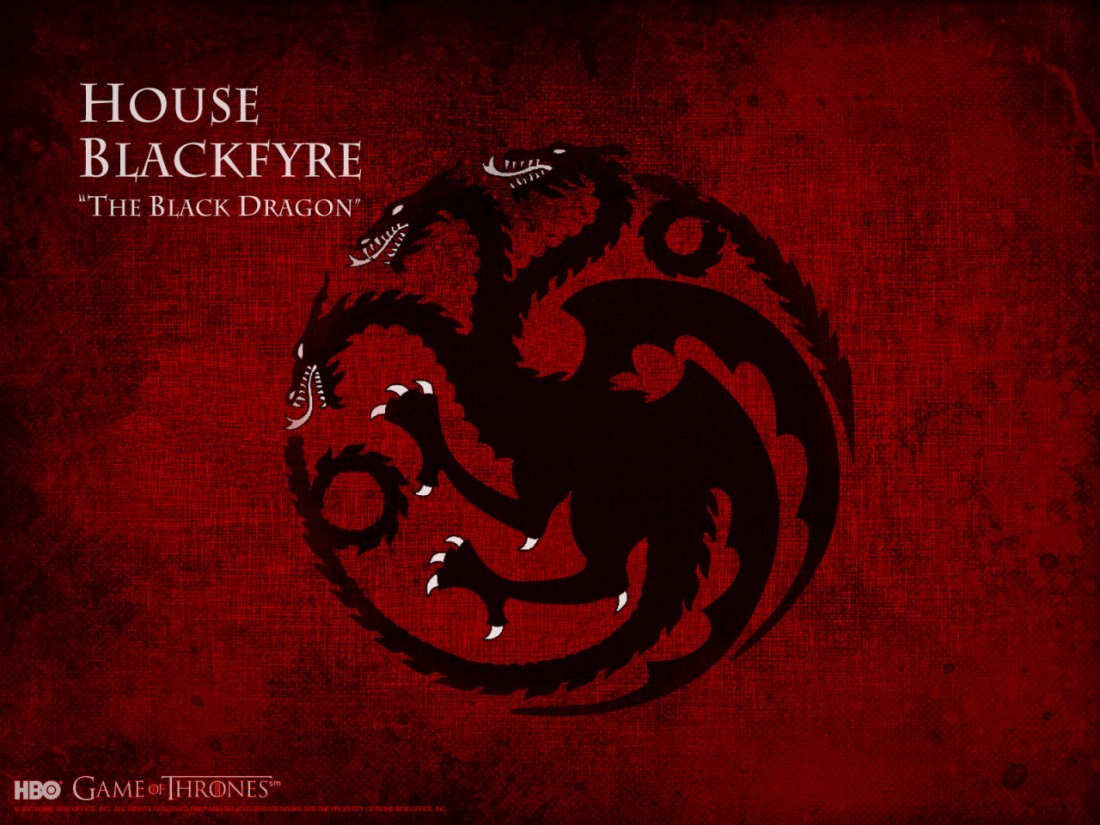
Guest Post on Tower of the Hand: The Blacks and Reds, Part I
The long-anticipated first part in a new essay series on the Blackfyre Rebellions has arrived! In this essay, I explore the origins and causes of the First Blackfyre Rebellion, both on a geopolitical and personal level, which houses fought for the Black Dragon and which for the Red, and unveil my Leo Longthorn Conspiracy theory. Enjoy!
Sorry if you’ve already clarified this but, in your opinion, how much responsibility does Sansa have for Ned’s fall and the success of Cersei’s counter coup? Cersei makes a big deal of Sansa spilling everything to her, but is that true or is it just Cersei trying to give herself credit for how ‘well’ she’s been doing keeping things together? It definitely leaves an impression on Tyrion in the later books.
I covered this here.
1. Sansa didn’t inform Cersei of the existence of Ned’s counter-coup, Ned did that himself.
2. Sansa didn’t allow Cersei to foil Ned’s counter-coup. LF did that.
3. Sansa may have contributed to her own capture, because the only things she could have shared with Cersei were the precise timing of Ned’s coup and the fact that he planned to put them on board ship.
Cersei makes a big deal about it to Tyrion because it’s the one thing she can take credit for besides Robert’s death.
Steven, it’s KrimzonStriker. I’ve had this back and forth on Bryndenbfish recently but now I’m going to challenge you. What makes anyone think Dorne has some kind of grudge against Rhaegar regarding Lyanna? Dornish culture is now confirmed as to being very open about having other lovers alongside their marriages. Even if Rhaegar took Lyanna as a wife, which no one knows he did anyway, as long as he didn’t divorce Elia and disinherit their kids what does Dorne have to complain about?
I think they absolutely had a grudge. Yes, it’s true, the Dornish are quite open about paramours, but you’ll note that paramours tend to be of a lower class than the wife or husband of the person in question, and thus not a social threat. Lyanna was a Stark of Winterfell and thus of sufficient standing to marry a prince and totally inappropriate to be a mistress. If Rhaegar elopes with her, everyone’s first thought is going to be that he’s setting his wife aside. There’s also an expectation of some discretion – and Rhaegar had openly snubbed his wife (who had just been told could not have another child) in favor of the new hottie.
Secondly, there’s a good deal of evidence that the Martells especially were pretty pissed off – they only sent 10,000 men to save the capitol, Aerys was resorting to open hostage-taking to ensure loyalty, and the surviving Martells tend to speak of Rhaegar with some tension.
Assuming that Dany never went on her anti slavery campaign so the situation in Essos/Slaver’s Bay/Qarth/Dothraki are essentially what they were at the start of the series. How long can the Dothraki keep up their tribute/pillage/slavery system? Are they running out of places to pillage? Seems like they slowly ran over the former Sarnori cities after Valaryia fell. Are they just fighting each other now? Will the free cities be the only source of slaves left? What happens then?
Sadly, I think this is a pretty stable system, as it’s been going on for the better part of 300 years. The Dothraki play a major constitutive role in the Essosi economy, essentially farming central Essos for people. And being the very good herdsmen that they are, they know not to cull the herd too much.
I just read your estimates for the populations of Braavos, Volantis etc. Your more conservative estimates “after consulting with Elio” seem reasonable, but still on the upper end of what I think is probable. In the real world history, even Rome at the height of its power had around 1 000 000 people, 1 200 000 if you go by the higher estimates. Rome had a huge empire and controlled the most fertile lands in the world. Are you sure about those numbers – I would love to talk. Btw I ran out of space
I’m not at all sure about these numbers – then again, keep in mind we’re talking about a later stage of technological development. The Free Cities are firmly in the Renaissance, not the Roman Empire, and they went through much less of a “dark ages” (as much as that term is a loaded and inaccurate one) than did the great colonial metropolises of Western Europe during the collapse of the Roman Empire. Then again, Renaissance Venice peaked at 200,000, Florence at 80,000, Milan at 100,000 – although all those figures leave out the rural populations they controlled.
However, you have to adjust for GRRM’s scope. King’s Landing is 500,000 people – historical London wouldn’t hit that size until roughly 1700. Likewise, we know for a fact that Volantis’ colonies are 500,000 each, which is likewise way out of proportion.
So if Davos brings Rickon back in one piece, then am I correct in assuming that he now has the true heir to Winterfell? (Can’t Imagine Bran ever returning to the normal world.) This could pretty much ruin almost all of Littlefinger’s plans involving Sansa, no?
Well, here’s the thing, I think there’s going to be a good deal of conflict, or at least potentially:
- Rickon will no doubt have the support of the Manderlys and probably Stannis too, but other people might be resistant to giving the southerners that much power, especially if Rickon is hastily betrothed to a female Manderly (Manderly is a loyal northman, but he’s also a loyal northman who makes sure he gets rewarded in full).
- Sansa is older, and is being championed by the Vale. OTHO, she was married to Tyrion Lannister before, and the North isn’t going to like that her first husband might try to assert a claim.
- Robb’s will naming the significantly older Jon Snow as his heir may be championed by the Glovers, Mormonts, and Reeds.
- The Liddles and the other hill clans might back Bran Stark, who they know is alive and the older of the surviving trueborn sons.
I have to ask regarding “The Princess and the Queen”, where many of the fans see Rhaenyra as proto-Cersei without parsing through the text and Gyldayn’s obvious misogynist PoV. I am seeing many fans reading it and saying that Viserys II was wrong in trying to make a woman a heir and the like. Do you think we are supposed to take Rhaenyra’s reputation as “Maegor’s teats” or that the Iron Throne cut her while she was wearing armour at face value?
Rhaenrya had her good qualities and her bad. I think chiefly among her bad qualities was an early-Stannis-like inability to let anything slide, thus the moment she actually gets into power she spends more time taking revenge than actually ruling. Hence, mass arrests and executions and torture, and people side-eyeing her because of putting Alicent in chains and poor Haelena committing suicide over the death of her children, hence completely counterproductive orders to execute her own dragonriders.
I’m sure we can chalk some of it up to propaganda, but some things are historical fact – Rhaenrya so alienated the people of King’s Landing that they rose up against her and killed her dragons, breaking the power of her House. That on its own discredits her as a politician.
But ultimately, Viserys II’s mistake was that he couldn’t make up his mind. If Rhaenrya was going to be his heir, he shouldn’t have remarried and had more children.
I like this comparison between Stannis and Rhaenyra a lot — though so far, Stannis has been relatively forgiving of his enemies and traitors. Though I doubt that Stannis will ever sit the Iron Throne, I am curious if we’d have a “heads, stakes, walls” phase of rule by Stannis — especially if he didn’t have a war to fight.
Sure. Hence why I say early Stannis. Post-Castle Black, Post-Blackwater, even Post-Storms End Stannis is a different man from Prologue Stannis.
Stannis has the capacity for growth and change, and I think it will be his salvation.
 RFTIT Tumblr Backup