When surcoats began being phased out of use towards the end of the medieval period, how would heraldry be displayed when men were fully armored? Were there ways to tell who was who without knights having their crests displayed on their armor?

image

(pictured above, a crusader’s surcoat)

During the “surcoatless period,” which was a real phase in the history of European armor (1410-1430), people still used heraldry, they just didn’t use the surcoat because it was seen as unfashionable compared to wearing your armor “all white” (i.e, bare steel) and because it restricted movement. 

Instead, they would carry their heraldry just on banners and lance pinions, or painting it onto the armor itself, as we see here:

image

However, between 1430-1500, they used tabards or jupons instead, which were shorter (usually just to the waist) and either had shorter or no sleeves at all, so they wouldn’t impede movement, but they would still do the basic job of identifying who was on which side and who might be worth a ransom.

image

How will Quaithe reappear in the story? More importantly, will Quaithe reappear in the story? I envision a deus ex machina appearance at Vaes Dothrak before permanently disappearing into the shadows.

I think Quaithe will show up once in Vaes Dothrak to confirm some prophecies and point Dany to Westeros, and then I’m going to say once more at King’s Landing after Dany roasts Aegon, and then maybe once more during the Second Battle for the Dawn. 

But she wouldn’t be a deus ex machina – in Greek drama, these show up generally at the end of the play to resolve the plot. For example, in Euripedes’ Medea, they would lower a golden sun-chariot on a crane to help Medea flee the wrath of Jason having murdered his new bride, father-in-law, and his and Medea’s two children. And the chorus comes in to underline how the deus ex machina is about really blatant stuff happening unexpectedly:

     Zeus on Olympus,
     dispenses many things.    
     Gods often contradict
     our fondest expectations.
     What we anticipate
     does not come to pass.
     What we don’t expect
     some god finds a way                                                           
     to make it happen.
     So with this story.

Whereas Quaithe is really closest to the Greek chorus, warning the hero about the inexorable workings of fate and the perils of hubris, and then confirming that the will of the gods has come to pass in an unexpected ironic fashion. (She’s closest actually to the Oracle at Delphi, but the Oracle didn’t show up in Greek theater, so /shrug). 

These naval questions are great! Was there something preventing medieval navies from adding a few ships each year so that you didn’t have huge swings in available forces? It’d seem like it’d be good for both the navy and your shipbuilding industry to have a steady amount of new vessels being ordered rather than huge boom and sink cycles. Thanks!

Glad you like them! 

Basically, it comes down to questions of state capacity – could the monarch tax enough on a regular basis to keep a standing navy and a shipbuilding industry around in peace-time? Usually, the answer was no, because the taxing powers of the monarch tended to be too fixed by tradition, and the revenue service too undeveloped, to collect the necessary funds…in peace time. War, it was generally understood, was an exception to the normal rule, and the powers of the monarch were greatly expanded. 

To use England as an example, the monarch was supposed to fund both their household/court and the government out of their personal incomes plus their “ordinary incomes” (namely, revenue from excise taxes on imported wines, plus incomes from various monopolies) which Parliament traditionally voted them for life. Anything more than that required a vote of Parliament to impose taxation…but during war, the King could impose “ship money” on ports, coastal towns, and coastal shires – in essence, a feudal requirement to provide ships for the navy or enough cash for the king to build or hire additional ships. 

But ship money was only supposed to be imposed in times of war, and when Charles I tried to use it in times of peace to avoid having to call Parliament, it led to a huge legal controversy, a massive campaign of tax refusal, and helped to build up the Parliamentary coalition against Charles I which would lead to the English Civil War. 

So with those kind of institutional structures, you’re not going to get a steady ship-building programme.

Does Robert keeping Jaime and Selmy in the Kingsguard make any sense? You can argue political reasons for Jaime and a show of continuity for Selmy, but in the end how wise is it to keep bodyguards of a former king you’ve toppled? I know Selmy was a loyal knight but I would tend to think of him as an outlier

Kingsguard are supposed to be loyal to the institution, not the man, so no I don’t think that’s a problem. More of a problem to have a kingslayer, I would think. 

What ties do you think Littlefinger has in Braavos? And what ties does he have with the Iron Bank as a person? I don’t think the Iron Bank is collaborating with LF (why would they want to bankrupt one of their biggest clients) but it can be that LF is pitching them ideas about debt restructuring & restructuring the Westeros economy and owning it all – the Westeros Marshall Plan so to speak

LF embezzled millions of dragons from the Iron Bank. He’s not a constructive economic player, he’s a scam artist. 

Adding to the ship questions: where do dromonds fit on, and is Aurane Waters’ treachery plausible?

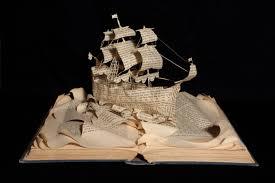
Dromonds were a Byzantine improvement on the Mediterranean galley. They had an above-water spur rather than an underwater ram, lateen (triangular) sails which are easier to use to tack into the wind, providing superior mobility in adverse winds, and had a full rather than partial deck, which provided additional protection for the rowers from missile fire. 

image

As for Aurane, yes it is. For example, Warwick the Kingmaker was the Captain of Calais and Lord High Admiral of England, which gave him control over England’s largest standing military and its navy. Warwick repeatedly used the navy to conduct pirate raids against the Castillians and the Hanseatic League, which made him very popular with the London merchants he fenced the booty to (and who were competitors of the Castillian and Hanseatic merchants). 

image

(A cool animatronic at Warwick Castle, which I visited when I was a youngun…)

And when fighting between York and Lancaster broke out, Warwick used the navy both defensively (allowing him and the Duke of York and his family to escape into exile) and offensively (his invasion of June 1460 which led to the Battle of Northampton where he captured Henry VI). The garrison stayed (mostly) loyal to him because Warwick was the richest man in England and offered them pirating loot to boot. 

Moral of the story: make sure your admirals are loyal, because ships are a very mobile asset.