Why was the scattered land holdings system favored historically when the contiguous route seems much easier?

Well, it’s more efficient from a production standpoint – which is one reason why families did try to marry neighbors when possible – but it’s not necessarily easier. There’s no guarantee that neighbors will produce children at the right time and right gender sequencing for those marriages to take place, there’s always the tradeoff between marrying into a smaller neighboring landholding vs. a bigger landholding that’s not contiguous, and there’s neighbors on more than one side, and so on. 
image

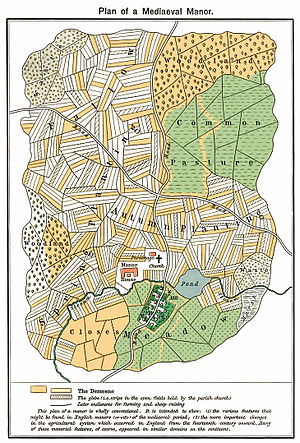
However, I’d say the biggest issue is the variable quality of land.

One of the reasons why manors divvied up land in strips as opposed to any other shape or configuration is they were trying to make sure that every family got a share of “bottomland” and upland, so that you didn’t have a situation in which some families couldn’t support themselves on their assigned plots. 

Well, the same issue applies when it comes to marriages: your neighbor’s land might not be of equal quality to your land, whether that’s because it doesn’t get as much water or the soil pH is off or it’s rocky or whatever. In that case, it’s better to marry into a famiy that’s non-contiguous but has high-productivity land. 

And the same principle goes all the way up the class scale, just on different issues: your neighbors’ manors might not bring in as much of an income as manors on better land somewhere else, and so on. 

You have explained many times that there really isn’t a market for land because of feudal contracts, but how do ‘urban’ property rights work in a medieval setting? Do people own the buildings but not the land? Do they also own the land? Do urban property owners owe any taxes to the city or the lord who controls it?

Great question!

Unless one owned the freehold, then most people didn’t own the land that their buildings were on top of. Instead, what tended to happen was that people would take out very long leases on property. For example, even when Thomas Cromwell hit the big time, becoming Master of the Jewels and Clerk of the Hanaper in 1532, in order to expand his main London residence, he had to take out a ninety-nine year lease from the Augustinian Friars who had been his landlords for several decades. Moreover, there could be very complex chains of sub-tenancies, where people would take out a lease from the freeholder and then rent out properties to people who might then rent out spare rooms, etc.

To answer your question about taxes, if someone was living in a city in the legal sense, i.e a geographic corporation that held a municipal charter, then they were usually not controlled by a lord and would owe taxes only to the monarch, although often the “borough rights” that came with a municipal charter often involved freedom from some forms of taxes and feudal incidences. 

When did kings start allowing land to be bought and sold?

It’s a bit complicated. To quote myself:

In Medieval England, for example, the feudal principle of “Nulle terre sans seigneur” (no land without a lord) meant that selling land outright, known as “alienation of lands by will,” was actually legally impossible until the late 12th century. (The Magna Carta, for example, says that “No free man shall henceforth give or sell so much of his land as that out of the residue he may not sufficiently do to the lord of the fee the service which pertains to that fee.”) Selling land was legalized by the Statute of Quia Emptores in 1290, although the buyer was “required to assume all tax and feudal obligations of the original tenant,” so the land remained under the same lord as before. It wasn’t until the Tenures Abolition Act of 1660 that those feudal obligations were eliminated.

I think there are arguments you could make for either 1290 or 1660 as “when…kings start allowing land to be bought and sold,” although more accurately it was a gradual process, owing as much to decisions about enforcement and legal fights over whether feudal obligations once allowed to lapse could be invoked later on, that spans the two dates. 

Did medieval nobles value land itself, apart from the money they could make out of it or the defensive value? Did controlling a number of acres give you prestige by itself, or would people always ask how fertile it was and what you were producing from it?

Medieval nobles probably wouldn’t measure prestige in acreage or income; that’s much more of an Early Modern/19th century thing (think Jane Austen, where members of the gentry are sized up as having or “being on” “four or five thousand a-year.”). Rather land would be described in looser, more traditional terms: a “goodly” or “well-stocked” manor or fiefdom, as a barony or a county or duchy, etc. 

As to how they felt about the land itself, it’s a bit complicated in the Medieval era, because technically, nobles didn’t own the land itself but rather owned an “estate in land,” i.e various rights over that land. Then again, virtually no one owned land outright, with it being far more common for people to have various tenancies and sub-tenancies. So the land (apart from the land held by the lord directly as opposed to rented out) is less important than one’s rental income. 

This changed rather dramatically beginning in the late Middle Ages, as statues like Quia Emptores gradually allowed for the easier sale and purchase of land, and as cash rents replaced feudal obligations – leading to the period known as “bastard feudalism.” Basically, as lords increasingly began to own land outright and pay for soldiers directly as opposed to giving away land for feudal service, all of the sudden the nobility has a much higher stake in land management, because the more cash you can get out of your estate, the more men you can pay to be part of your affinity.

So if you’re a nobleman with an eye for the coming thing, you’re going to hire some people to turn any wasteland you might own into productive land by draining fenland and the like, you’re going to support the enclosure movement to get your hands on the commons, you’re going to invest in modern farming techniques, and try to raise rents whenever and however you can. 

Tyrion mentions that the Westerlings had sold off a large portion of their lands. How exactly would such a transaction take place in a feudal economy? Would there be restrictions on who they could sell to and for how much?

Discussed somewhat here

The Westerlings selling their land is a highly unusual event in Westeros – the only other times we hear about selling land is in the context of the Tarbecks forcing people to sell their land through threat of armed force, so voluntary (to the extent that the necessities of poverty qualify as voluntary) land sales are a sign that the feudal order is in crisis. 

It suggests that the Westerlings were falling into genteel poverty, such that their rental income had fallen massively behind their ability to service their debt, and that they were having to surrender the collateral they had put up to secure the loan. 

Legally, this could be quite tricky. In Medieval England, for example, the feudal principle of “Nulle terre sans seigneur” (no land without a lord) meant that selling land outright, known as “alienation of lands by will,” was actually legally impossible until the late 12th century. (The Magna Carta, for example, says that “No free man shall henceforth give or sell so much of his land as that out of the residue he may not sufficiently do to the lord of the fee the service which pertains to that fee.”) Selling land was legalized by the Statute of Quia Emptores in 1290, although the buyer was “required to assume all tax and feudal obligations of the original tenant,” so the land remained under the same lord as before. It wasn’t until the Tenures Abolition Act of 1660 that those feudal obligations were eliminated.