Is the word “Westeros” supposed to be Old Tongue or Andal? What would make more sense?

Good question!

image

(Hat tip to Adam Whitehead of the Atlas of Ice and Fire)

The ordinal names of the continents – Westeros, Essos, Sotheryos – are a bit odd, because in order for them to be named that way, “Westeros” has to be thought of “west” of something, Essos has to be thought of “east” of something, and Sothoryos has to be thought “south” of something. 

Since “os” and “rys” and “ros” are used in Valyrian, my guess is that these names emerged from Valyria. This makes sense from an ordinal perspective: Westeros was the strange and forbidding land to the west of their empire, and Sotheryos is immediately south of the Valyrian peninsula. The odd case is that of Essos – why not call your home continent something akin to the “Middle Kingdom,” think of it as the center of the world? 

My guess is that the term was originally applied to the lands “east” of the Valyrian peninsula, given that the Valyrians’ oldest foreign relations were with the empire of Old Ghis, and then expanded outwards from there to include the whole landmass as Valyria’s knowledge of the world expanded and especially when their empire grew to encompass much of it. 

I definitely see why Patchface is likely the prophet of the Drowned God; he seems likely to have been a prophet even before he encountered the Drowned God when the ship went down, and went a little nuts after looking the God (demon?) in the face. I’m a little mystified by Thoros though. What did he do to draw R’hllor’s attention, and what led R’hllor to bestow his gifts on Thoros, who by all accounts was kind of a drunken lunatic before joining the Brotherhood Without Banners?

“he seems likely to have been a prophet even before he encountered the Drowned God” – how do you figure this?

As to why R’hllor worked his will by the Mummer’s Ford, I think it was a miracle. And as GRRM the recovering Catholic well knows, a miracle is cloaked in mystery and ineffable, inexplicable grace. Thoros notes that it has nothing to do with Thoros himself:

“I have no magic, child. Only prayers. That first time, his lordship had a hole right through him and blood in his mouth, I knew there was no hope. So when his poor torn chest stopped moving, I gave him the good god’s own kiss to send him on his way. I filled my mouth with fire and breathed the flames inside him, down his throat to lungs and heart and soul. The last kiss it is called, and many a time I saw the old priests bestow it on the Lord’s servants as they died. I had given it a time or two myself, as all priests must. But never before had I felt a dead man shudder as the fire filled him, nor seen his eyes come open. It was not me who raised him, my lady. It was the Lord. R’hllor is not done with him yet. Life is warmth, and warmth is fire, and fire is God’s and God’s alone.”

Now, there are some arguments that people have made that the spells and prayers that Thoros had been taught are secular magic hiding behind a religious wrapper, and that now that magic is coming back into the world, the spells are working again. (After all, the old priests never brought anyone back from the dead either.) After all, Melisandre often cloaks secular magic as reliigous in nature. 

However, I disagree. While it is possible that Thoros and Melisandre were trained in secular magic that they learned in the Red Temples as novices, Beric Dondarrion wasn’t. And yet Beric turned his blood into flame (the true version of Thoros’ old trick) without uttering a syllable or a spell, and brought Lady Stoneheart to life with a kiss that did not require filling one’s mouth with fire first. 

So I think it had nothing to do with Thoros, and solely to do with the ineffable plans of the Red God. 

in the show it’s revelead that the Iron Bank invested in the slave trade of Essos. Would that be something that could happen in Book!Braavos?

Not directly, no. The First Law of Braavos forbids slavery, and that law is enforced:

“I know why the Sealord seized the Goodheart. She was carrying slaves. Hundreds of slaves, women and children, roped together in her hold.” Braavos had been founded by escaped slaves, and the slave trade was forbidden here.

“I know where the slaves came from. They were wildlings from Westeros, from a place called Hardhome. An old ruined place, accursed.” Old Nan had told her tales of Hardhome, back at Winterfell when she had still been Arya Stark. “After the big battle where the King-Beyond-the-Wall was killed, the wildlings ran away, and this woods witch said that if they went to Hardhome, ships would come and carry them away to someplace warm. But no ships came, except these two Lyseni pirates, Goodheart and Elephant, that had been driven north by a storm. They dropped anchor off Hardhome to make repairs, and saw the wildlings, but there were thousands and they didn’t have room for all of them, so they said they’d just take the women and the children. The wildlings had nothing to eat, so the men sent out their wives and daughters, but as soon as the ships were out to sea, the Lyseni drove them below and roped them up. They meant to sell them all in Lys. Only then they ran into another storm and the ships were parted. The Goodheart was so damaged her captain had no choice but to put in here…” (AFFC, The Blind Girl)

And that’s just domestically – internationally, Braavos has fought six wars with Pentos over the issue of slavery, and forced Pentos to abolish slavery and the slave trade. 

On the other hand, the Iron Bank of Braavos is quite active in lending to “Kings, princes, archons, triarchs, and merchants beyond count,” and they in turn likely buy and sell slaves (although I doubt that the Iron Bank would approve a business loan specifically to buy slaves as opposed to a general line of credit). 

However, we’ve had quite a few chapters set in Braavos, between Arya and Sam, and GRRM has not been sparing in the gossip, letting us know about merchants and nobles, courtesans and bravos, and that the Sealord is ailing and there will be a “choosing” soon, and we even know the name of one of the leading candidates. At no point in time have we heard anything about the Iron Bank supporting Volantis against Daenerys for interfering with the slave trade. 

My belief is that the slave trade nonsense was cooked up by Benioff and Weiss to give the Iron Bank a motivation to back Cersei against Daenerys because they’ve essentially given Aegon’s plot to Cersei (hence giving her the Golden Company) in order to give Lena Headey something to do. 

I’m curious about where the idea for a system of canals in your Westerosi economic development plans came from. The only IRL historical example of such a system that I can think of was in China, and that one kinda broke down in government corruption and general infrastructure decay after a thousand years or so. I guess I’m curious about how you would manage the upkeep of these canals, and also how you would counteract corruption in trading ports and port cities in general.

Great question!

image

You’re not the first person to bring this up, but no, the Grand Canal of China is not the only example of premodern canal-building as an economic development strategy, only the biggest and most extravagant example.

Indeed, the reason why I put canals at the center of my Economic Development plans is that canal-building was a quite common part of Early Modern European economic development, as the Commercial Revolution offered enormous advantages to European states that could move goods faster than their competitors:

  • In France, canal-building was a major part of the economic policy of more than a few monarchs and finance ministers: you had the Briare Canal (35 miles long) built to link the Loire to the Seine, and most impressively you had the Canal des Deux Mers which connected the Atlantic to the Medittarnean (270 miles long). 
  • In Germany, the Prussians were absolutely mad for canals, so you had a series of canals built by zarious Hohenzollerns to link the Elbe to the Oder to the Weser.
  • Due to the nature of their geography, the Dutch and the Belgians were huge innovators in canals going back to the 13th century, building canals to protect their cities from armies and floods but also to encourage water-based commerce, and to connect Amsterdam to Haarlem, Haarlem to Leiden, and so on and so forth.
  • While most English canals were built during the “canal mania” of the 18th and early 19th centuries, there are quite a few canals built during the Early Modern period (the Exeter Canal in 1566, the Oxford-Burcot improvements to the Thames between 1605-1635, the River Wey improvements in 1653, the Stamford Canal in 1670, etc.)

In general, I opted for canals because you can build them with existing technology (they mostly involve a lot of manual labor, and various forms of simple locks were well within the technological capacity of Medieval Europeans) which means that the plan doesn’t rely on the discovery of new technology, they have a broad economic impact across a wide area by reducing transportation costs and lowering the price of bulk goods, and because Westeros has a lot of major river systems that almost, but don’t quite, connect so that relatively short canals can have an outsized impact on travel. 

I’ve always wondered why nobody else in King’s Landing was able to figure out the Lysa-Littlefinger conspiracy. What would have happened if anyone had discovered their role in Jon Arryn’s death in GOT? Does the crown invade the Eyrie? Does it delay the inevitable war between Stark and Lannister?

The simple Doylist explanation is that no one else can find out because it would end the plot – if brought to Robert’s or Ned’s attention, Lysa and Littlefinger are attainted for murder and conspiracy to break the King’s Peace, they’re arrested either with or without a brief siege of the Eyrie by loyal Valelords, and the Starks and Lannisters are much less likely to go to war since they’ve just almost been conned into a war – and GRRM needs the plot happen.

The more complicated Watsonian explanation is that the ease or difficulty of detecting a conspiracy depends on how many people are involved and how careful the people in question are being. Most of LF”s plot pre- and during AGOT is him working either solo or through cut-outs, or working just with him and Lysa. All he has to do is persuade Lysa to kill Jon and send the letter, and as long as she doesn’t tell anyone else (and her leaving for the Vale immediately really helps with that) it’s very hard for him to be found out unless you have LF tailed 24/7 and that’s very hard to pull off. 

In your essay on Dorne, you suggest that Vorian Dayne came after Davos Dayne. Which is a big surprise 1- Vorian would be far more plausible as the king who was eventually defeated and sent to the Wall, with Davos succeeding him as leader of the Dayne household. 2-If Vorian was sent to the Wall for leading a failed rebellion after the consolidation of the Martell as rulers of Dorne, it seems to me very unlikely that he would be sent with the status of king

Looked at the text yet again, and I think there’s a broader problem about the way that WOIAF describes Nymeria’s Conquest which makes the sequence of events really confusing:

racefortheironthrone:

Here’s my logic:

  1. We know that during Nymeria’s first marriage, the Daynes were allies of Mors Martell during his nine-year campaign against the Yronwoods. Sending Vorian Dayne to the Wall in this early phase wouldn’t make much sense.
  2. After Mors Martell’s death, which came before Nymeria’s eventual victory against the Yronwoods, Nymeria married twice, first to the Ullers and second to Ser Davos Dayne, who was the Sword of the Morning but not Lord of Starfall. 
  3. Davos Dayne’s son with Nymeria was passed over as Nymeria’s heir – which would break the First Men and Andal rules of succession that the Daynes would have followed – in favor of her oldest daughter with Mors Martell, following the new Rhoynar customs. In dynastic politics terms, this is a huge blow to House Dayne, rendering the marriage alliance useless.
  4. Vorian Dayne, who was Lord of Starfall but not Sword of the Morning, was sent to the Wall at some point by Nymeria – why would the two come to conflict when their Houses had been allies in the war against the Yronwoods? Well, Nymeria’s decision to name her oldest daughter over her oldest son would be a clear casus belli

My belief is that King Vorian Dayne was the older brother of Ser Davos, in one of those periods in which Dawn had been given to a non-ruler of Starfall (as was the case with Ser Arthur Dayne), that he allied with Nymeria against the Yronwoods, confirmed that alliance by marrying his highly symbolic younger brother to Nymeria, rebelled when his nephew was disinherited, was defeated, and was sent to the Wall as a King in part to smooth over ongoing tensions within the court at Starfall, as I can’t imagine it would have been easy for Ser Davos or his son during the rebellion. 

The problem with your scenario is that, if Davos had succeeded Vorian, he would have been Lord Davos Dayne rather than Ser Davos Dayne when he married Nymeria. 

“Years of war followed, as the Martells and their Rhoynar partners met and subdued one petty king after another. No fewer than six conquered kings were sent to the Wall in golden fetters by Nymeria and her prince, until only the greatest of their foes remained: Yorick Yronwood, the Bloodroyal, Fifth of His Name, Lord of Yronwood, Warden of the Stone Way, Knight of the Wells, King of Redmarch, King of the Greenbelt, and King of the Dornish.

For nine years Mors Martell and his allies (amongst them House Fowler of Skyreach, House Toland of Ghost Hill, House Dayne of Starfall, and House Uller of the Hellholt) struggled against Yronwood and his bannermen (the Jordaynes of the Tor, the Wyls of the Stone Way, together with the Blackmonts, the Qorgyles, and many more), in battles too numerous to mention. When Mors Martell fell to Yorick Yronwood’s sword in the Third Battle of the Boneway, Princess Nymeria assumed sole command of his armies. Two more years of battle were required, but in the end it was Nymeria that Yorick Yronwood bent the knee to, and Nymeria who ruled thereafter from Sunspear.”

The first paragraph strongly suggests that Nymeria sent the six kings to the Wall before Yorick Yronwood was defeated. This is a bit of a problem, because the Dorne chapter lists Yorick Yronwood as one of the six kings sent to the Wall, and he could hardly have fought Mors Martell for nine years and killed him in the Third Battle of the Boneway if he was up at the Wall.  

Moreover, the second paragraph’s list of the various sides conflicts with the idea that the kings were all sent before Nymeria’s 11-year war against the Yronwoods. House Blackmont is described as bannermen of Yorick Yronwood, yet Benedict Blackmont was one of the six kings sent to the Wall by Nymeria; if Nymeria had already conquered the Blackmonts prior to the war, they wouldn’t have been counted as Yronwood bannermen. Likewise, Vorian Dayne and Garrison Fowler are listed as two of the six kings sent to the Wall. If they were defeated by Nymeria prior to the war against the Yronwoods, why would they be listed as mere “allies” of Mors Martell, rather than subjects and vassals?

In your essay on Dorne, you suggest that Vorian Dayne came after Davos Dayne. Which is a big surprise 1- Vorian would be far more plausible as the king who was eventually defeated and sent to the Wall, with Davos succeeding him as leader of the Dayne household. 2-If Vorian was sent to the Wall for leading a failed rebellion after the consolidation of the Martell as rulers of Dorne, it seems to me very unlikely that he would be sent with the status of king

Here’s my logic:

  1. We know that during Nymeria’s first marriage, the Daynes were allies of Mors Martell during his nine-year campaign against the Yronwoods. Sending Vorian Dayne to the Wall in this early phase wouldn’t make much sense.
  2. After Mors Martell’s death, which came before Nymeria’s eventual victory against the Yronwoods, Nymeria married twice, first to the Ullers and second to Ser Davos Dayne, who was the Sword of the Morning but not Lord of Starfall. 
  3. Davos Dayne’s son with Nymeria was passed over as Nymeria’s heir – which would break the First Men and Andal rules of succession that the Daynes would have followed – in favor of her oldest daughter with Mors Martell, following the new Rhoynar customs. In dynastic politics terms, this is a huge blow to House Dayne, rendering the marriage alliance useless.
  4. Vorian Dayne, who was Lord of Starfall but not Sword of the Morning, was sent to the Wall at some point by Nymeria – why would the two come to conflict when their Houses had been allies in the war against the Yronwoods? Well, Nymeria’s decision to name her oldest daughter over her oldest son would be a clear casus belli

My belief is that King Vorian Dayne was the older brother of Ser Davos, in one of those periods in which Dawn had been given to a non-ruler of Starfall (as was the case with Ser Arthur Dayne), that he allied with Nymeria against the Yronwoods, confirmed that alliance by marrying his highly symbolic younger brother to Nymeria, rebelled when his nephew was disinherited, was defeated, and was sent to the Wall as a King in part to smooth over ongoing tensions within the court at Starfall, as I can’t imagine it would have been easy for Ser Davos or his son during the rebellion. 

The problem with your scenario is that, if Davos had succeeded Vorian, he would have been Lord Davos Dayne rather than Ser Davos Dayne when he married Nymeria. 

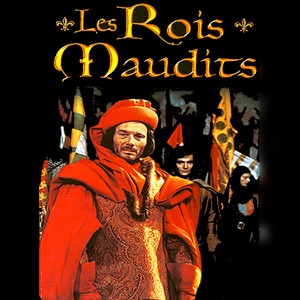
Speaking Ill of Kings: The Influence of Maurice Druon on ASOIAF (Part I)

Speaking Ill of Kings: The Influence of Maurice Druon on ASOIAF (Part I)

Image result for rois maudits

Introduction

Especially when discussing the more controversial aspects of ASOIAF, George R.R Martin will often point to history as a legitimizing factor – saying in essence if not outright that “this is how it was back then” – which has led to quite a few arguments from medievalists who point out that Martin’s world is far from the historical norm when it comes to some important issues.

To a…

View On WordPress

Where does the yunkish slave army outside Meereen come from? I tought Dany freed all the slaves in the Yunkai and confiscated a good chunk of the Wise Masters wealth? Did she just take them by their word and didn’t check up on the slavers upholding their end of the bargain?

So this is a question I thought I had answered, but may have gotten eaten by a browser refresh or OS crash, because I can’t find it anywhere in my archives.

So where did the Yunkish army – which keep in mind, is only one part of a larger coalition which includes the forces of New Ghis, Qarth, Elyria, Tolos, and eventually Volantis – come from?

Well, a lot of them are mercenaries who the Wise Masters hired – the Company of the Cat, the Long Lances, the Second Sons, and originally the Windblown – because while Dany redistributed a part of their wealth, her terms that the slaves should be given “as much food, clothing, coin, and goods as he or she can carry” would leave the bulk untouched. 

But I imagine your main question is about these soldiers:

“There were more, near as mad or worse: Lord Wobblecheeks, the Drunken Conqueror, the Beastmaster, Pudding Face, the Rabbit, the Charioteer, the Perfumed Hero. Some had twenty soldiers, some two hundred or two thousand, all slaves they had trained and equipped themselves.”

I think there are two explanations for where these slave-soldiers came from. The first is that the Yunkish simply bought them on the open market when they re-established slavery and began re-arming for war against Cleon. Certainly this explains sub-groups like the Clanker Lords. 

However, this explanation doesn’t work for Yunkish commanders like the Little Pigeon and the Girl General, both of whom are described as having bred their soldiers, which requires multiple generations’ worth of time, and thus can’t have happened in the few months between Dany’s liberation of Yunkai and the second siege of Meereen. 

My explanation for this latter group is that they were probably not in Yunkai when it was attacked. See, it’s rather unusual for Wise Masters to produce and train soldiers, since Astapor specializes in the Unsullied and Yunkai specializes in sex slaves. Given that they lead their soldiers in person rather than selling them to others, and that they’re ambitious for overall military command, my guess is that the Little Pigeon and the Girl General and their ilk were working as mercenaries elsewhere in Essos when Yunkai was attacked, and then came back home to take revenge on Dany. 

Bloodraven gets a lot of flak for not deploying the royal forces to fight Dagon Greyjoy, but isn’t the whole point of having regional Wardens with tens of thousands of men at their command, is to have a decentralized military command who can rapidly react to threats from their cardinal direction without having to rely on central reinforcements?

No. For one thing, the Wardens are not royal generals of a standing army, their titles simplify military chains of command in national crises, but they don’t come with budgets and warehouses and staff officers. Most importantly for this particular crisis, they don’t come with fleets. 

The problem that the Wardens of the North and West faced is that while they had land armies with which they could rush around trying to put out Dagon’s fires, they didn’t have the naval power to go after him directly. Nor did they have any authority over the only fleet on the west coast – the Redwyne fleet – that could have gone after him directly. 

The Iron Throne did, but didn’t use it. And that’s a problem for the whole feudal social contract, because “a king who does not protect his people is no king at all.”