Different anon, but in regards to Lannister and the gold market, how likely is it that they insisted upon ALL taxes being paid in gold from at least the bannermen with mines if not all of their principal houses, while most other Kings/overlords were fine with whatever combination of precious metals, food, timber, etc… their subjects could provide.

opinions-about-tiaras:

racefortheironthrone:

Almost certainly, yes. 

This seems like it would produce a lot of… I think economic velocity is there term?

Like, if their bannermen need to pay taxes in gold, they’re going to concentrate on either mining it (which is going to require paying workers or letting them keep a share of it or something) or on producing things they can then sell for gold to pay their taxes.

The Lannisters, in turn, cannot eat gold or sleep on it or make armor or swords out of it or whatnot. They’re going to turn around and immediately spend a lot of that gold on stuff that isn’t gold, pumping it right back into the economy they just extracted it from and once again encouraging people to accept payment for things in currency rather than in kind.

Absolutely agree. I would imagine, therefore, that the economy of the Westerlands is more economically “advanced” than a lot of its neighbors, in several ways:

  • You’d see much less barter and trading “in kind” and almost all transactions are made in currency (not getting into bills of exchange just for the sake of clarity). Even without a Golden Bank, I would expect to see more in the way of a financial sector, with goldsmiths and merchants acting as moneylenders using gold stocks as reserves for loans. 
    • In the Riverlands or the Reach, where the most common thing you have to exchange is agricultural products, I imagine you’d see the reverse, where there’s more barter and trade in kind and fewer transactions in currency – and a lot more of the phenomenon where prices in currency change rapidly during times of crisis when people’s liquidity preferences would change b/c you can’t eat gold. 
  • You’d see mining, processing (smelting), and smithing of gold and silver as a much bigger percentage of the economy (I talk about Westerlands guilds here), and correspondingly a lower percentage of the economy working in agriculture. That’s not to say that there’s no farming in the Westerlands – those vast herds of cattle Robb’s army rustled were tended by someone, and Cornfield clearly suggests that the southern Westerlands grows a fair bit of cereal crops – or that agricultural workers aren’t in the majority, but I might expect to see 75-80% as opposed to 90% everywhere else. 
  • Moreover, I imagine there’s a good bit of interregional trade between the Westerlands and its immediate neighbors – the West has the gold, the Reach and the Riverlands have the food, it makes sense. I also wouldn’t be surprised if a lot of wars between these three regions have broken out over changing terms of trade, if one side gets too greedy or decides that it would like to horizontally integrate instead of trade.
  • And finally, we have textual evidence from WOIAF that there’s a lot of international trade from a very early period. This might explain why Lannisport is such a big city despite being on the wrong coast, because the gold was such a lure to foreign traders that they were willing to sail west across the Summer Sea, and then the city grew to serve foreign trade. It sort of reminds me a little of the trade imbalances between Europe and China in the 18th and 19th century, but in reverse, where the Westerlands has the gold and Essos has the manufactured goods and luxury items and so Essos gets the hard currency it needs to have a large banking sector. 

(And velocity is exactly the right term…)

do you think bloodraven lost his sense of self the same way bran is going to?

I think people are over-estimating the loss of self. Bran’s not gone, he’s just having trouble swimming through the gestalt of every greenseer ever and that’s making him a bit distant b/c he’s multitasking from a distance. 

image

Looking at Bloodraven, who’s been the Three-Eyed Crow for at least fifty years, he certainly retains some sense of self:

“A … crow?” The pale lord’s voice was dry. His lips moved slowly, as if they had forgotten how to form words. “Once, aye. Black of garb and black of blood.” The clothes he wore were rotten and faded, spotted with moss and eaten through with worms, but once they had been black. “I have been many things, Bran. Now I am as you see me, and now you will understand why I could not come to you … except in dreams. I have watched you for a long time, watched you with a thousand eyes and one. I saw your birth, and that of your lord father before you. I saw your first step, heard your first word, was part of your first dream. I was watching when you fell. And now you are come to me at last, Brandon Stark, though the hour is late.”

The last greenseer, the singers called him, but in Bran’s dreams he was still a three-eyed crow. When Meera Reed had asked him his true name, he made a ghastly sound that might have been a chuckle. “I wore many names when I was quick, but even I once had a mother, and the name she gave me at her breast was Brynden.”

I know. I have my own ghosts, Bran. A brother that I loved, a brother that I hated, a woman I desired. Through the trees, I see them still, but no word of mine has ever reached them.

He knows his name, he remembers being a Night’s Watchman, he remembers the doggerel said about him when he was hand, and he remembers the strong emotional commitments he made in life – I’d say that’s a pretty good “sense of self” for anyone pushing 125, let alone a greenseer. 

Historically, how (if at all) did House Lannister control the flow of gold and silver from their vassal’s mines/vaults into the Westerosi and wider Essosi markets? We know that controlling the availability of these precious metals is of paramount importance, yet given the environment the story plays out in, could this even be done? Have these methods changed since the unification of the Seven Kingdoms under House Targaryen? – Thank You, RSAfan.

Good question!

Well, to a large extent, the Lannisters can pull a De Beers: since they have the largest supply, they can set the price by restricting or loosening the flow from their own vaults. 

image

Now, in IRL, gold mines required royal licenses. Given that different Houses have their own mines in the Westerlands, it doesn’t seem to have been the case that House Lannister had that kind of system. (Maybe the De Beers technique was good enough that they didn’t have to?) 

“But wrt to Robb, there is legal precedent for his will. The Night’s Watch has released men from their vows in the past.” When was this?

Ok already! Given the flood of anon asks, I’ll answer. So the evidence for this is as follows:

“Jon is a brother of the Night’s Watch, sworn to take no wife and hold no lands. Those who take the black serve for life.”
“So do the knights of the Kingsguard. That did not stop the Lannisters from stripping the white cloaks from Ser Barristan Selmy and Ser Boros Blount when they had no more use for them. If I send the Watch a hundred men in Jon’s place, I’ll wager they find some way to release him from his vows…”

“Not unless he’s legitimized by a royal decree,” said Robb. “There is more precedent for that than for releasing a Sworn Brother from his oath.” (Cat V, ASOS)

Granny: Is there any chance that Jon could be released from his oaths of the nightwatch?

George_RR_Martin: The great council would have released Aemon from his maester’s oath, so I suppose it would be possible. With an appropriate authority. (Source)

Let’s break this down:

  •  Robb’s comment that “If I send the Watch a hundred men in Jon’s place, I’ll wager they find some way to release him from his vows” suggests to me that there is some process for the Watch to release someone from their vows in extraordinary circumstances. 
  • Likewise, Robb’s comment that there is more precedent for legitimizing bastards than there is from releasing someone from their oath suggests to me that there is some, but very little, precedent for releasing someone from their vows.
  • GRRM’s response to the question about Jon, and keep in mind this question is being asked after ACOK came out but before ASOS came out, suggests to me that the “appropriate authority” can release Jon from his vows. Now, the authority in question could be many things: the Lord Commander, the Brothers voting as a whole, a king’s decree, etc. 

Also, I remember GRRM talking about it on some HBO video, an Inside the Episode or History and Lore, where he said that it had happened but they don’t like doing it, but I couldn’t find what I was looking for. 

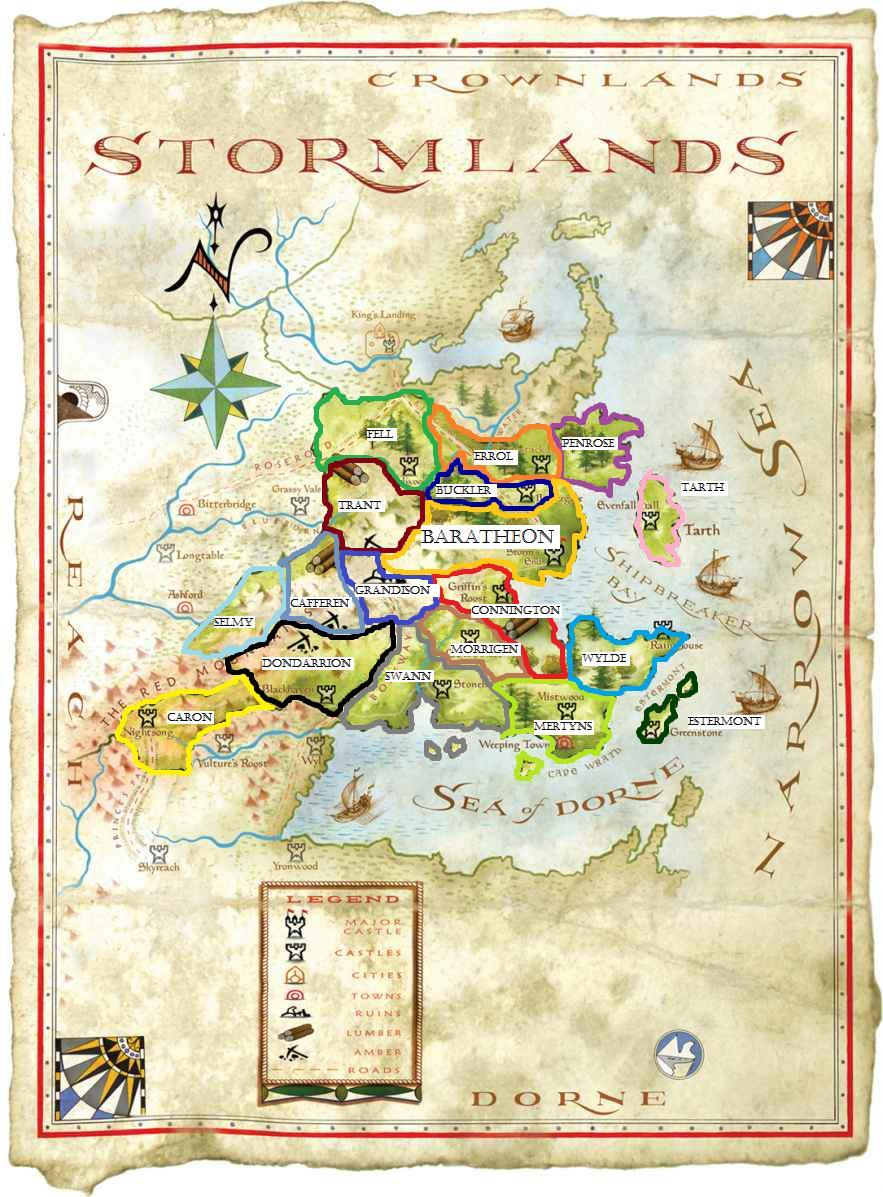
Getting some cool ASOIAF Maps recently got me thinking about roads. It seems there are some places (Kings Landing, Winterfell) that seem geographically important enough to draw roads towards them. I imagine other castles or towns are built because of where the road goes. Are there historical parallels for that? When roads are built what kind of factors go into where they go?

Excellent question!

In terms of where fortified settlements are found, prominent hills that provide for better defense, natural harbors on the coasts, good crossing points of navigable rivers, and points on overland trade routes (as well as crossroads) are all good candidates. 

For example, the city of Florence prospered in no small part because it was positioned right on the overland trade route between Venice and Rome, and on the overland trade routes from Italy to northern Europe. So in a sense, roads helped to build the city…although Florence’s growing industries in wool cloth, silks, and finance then gave reasons to build roads to connect other places to Florence.

image

In terms of what factors decide where roads go, it really comes down to geography (in the sense that a lot of main roads get built to connect major regions – think about the Via Appia, which the Romans built to connect Rome to connect the capitol to the grain-growing regions of southern Italy – or to deal with major natural obstacles (think roads built through mountain passes or bridges or the like)),and demography (in the sense that when you have clusters of people (because they’ve found a spot with certain advantages) it generally makes sense to build roads to connect them so that trade can be conducted, and this in turn makes those clusters bigger because it’s easier to move to those clusters, and creates new clusters at key points of the new networks).

Could it be that the assassination attempt on Daenerys(poisoned wine) was only stopped because Robert had taken his order back on his deathbed. Varys said it might be too late,and it was last minute. Jorah still reported on Dany in Qarth,and we now know Illyrio didn’t expect Dany to survive with the Dothraki anyway&only mattered again for his plans as she hatched dragons. Did the cancelling of the kill order arrive in time&save Dany&not Jorah’s ‘love’?

Here’s the thing that people don’t get about the wineseller: the whole thing was staged to push Khal Drogo into accelerating his plans for invasion, and carefully scripted by Varys and Illyrio. 

Varys gets the order, but rather than hire a professional like one of the Sorrowful Men or something, he hires a complete patsy who even a relative naif like Dany sees through in an instant. And then he sends a letter to Illyrio telling him exactly what’s going to happen, and Illyrio sends a letter to Jorah, and lo and behold Jorah’s on the scene to “save” Dany and gain her trust so that he can help Varys and Illyrio “steer” Dany from long range. 

In other words…it’s not a “real” assassination attempt, it’s more of an elaborately plotted piece of theater meant to convey the impression of an assassination attempt.

A mummer’s farce, one might say…

image

A Parcel of Rogues in a Nation: the Great Councils of Westeros (Part I)

A Parcel of Rogues in a Nation: the Great Councils of Westeros (Part I)

image

credit to Marc Simonetti The “game of thrones” has become such a powerful symbol in the broader ASOIAF fandom that our perceptions of how Westerosi politics function have been distorted by it, resulting in an imaginary that is far too authoritarian and top-down. The King of Westeros is not an absolute monarch, nor is it normal for liege lords to wipe out entire houses for disloyalty. Rather,…

View On WordPress

a worldbuilding question about house justman. What would you name their fortress/seat, its corresponsing city(if the castle has one) and where would you place it/them? around the place where the trident forks or where harrenhall was build seems like the two best possible places.

Good question! 

As discussed here, I would guess based on the story that the Justman seat and lands would be on the Red Fork between Stone Hedge and Raventree Hall, both because Benedict Justman’s support was initially from the houses of his mother and father, and because putting himself physically in between the Brackens and Blackwoods is probably the only way to keep them from fighting. 

image

So I would imagine that the castle proper is on an island in the middle of the river overlooking a major ford over the Red Fork, but also controls lands on both banks. As for the name, I kind of like Scales – it follows from House Justman’s sigil, but it also works to allude to the fishes in the Red Fork and that general Trident vibe. 

Great Game Timeline Project

In my Politics of the Seven Kingdoms series, I’ve tried to reconcile the timeline of the Era of the Great Game, those roughly six thousand years between the Andal Invasions and Aegon’s Conquest.

As part of that effort, I’ve decided to put together a GoogleSheets spreadsheet to construct as accurate a timeline as can be made. As you can see, it’s a bit threadbare atm, but it’s getting better. 

And in the absence of a working multiple-recipient message function in Tumblr, I figured I’d make it an open invitation. @goodqueenaly, @warsofasoiaf, @nobodysuspectsthebutterfly, @joannalannister, @hiddenhistoryofwesteros, your help would be greatly appreciated; if you shoot me a message I’ll shoot you a editor’s link to the spreadsheet. Also, if I’ve forgotten anyone who would be good to ask or who would be interested in helping out, please let me know.