How come the pre-Andal Royces never absorbed Gulltown into their kingdom? It’s the largest port town in all the Vale and only a stone’s throw away from Runestone itself, so why would they leave it alone? It’s not like they couldn’t do it, the Royces are described as one of the most powerful forces in the Vale at that time.

They did try:

Farther south, the wealthy harbor town of Gulltown on the Bay of Crabs was ruled by Osgood Shett, Third of His Name, a grizzled old warrior who claimed the ancient, vainglorious title King of the True Men, a style that supposedly went back ten thousand years to the Dawn Age. Though Gulltown itself was seemingly secure behind its thick stone walls, King Osgood and his forebears had long been waging an intermittent war against the Bronze Kings of Runestone, a more powerful neighbor from a house as old and storied as their own. Yorwyck Royce, Sixth of That Name, had claimed the Runic Crown when his sire died in battle three years previous, and had proved to be a most redoubtable foe, defeating the Shetts in several battles and driving them back inside their town walls.

Unwisely, King Osgood turned to Andalos for help in recovering all he had lost. Thinking to avoid the fate of Shell and Brightstone, he sought to bind his allies to him with blood in place of gold; he gave his daughter in marriage to the Andal knight Gerold Grafton, took Ser Gerold’s eldest daughter for his own bride, and married a younger daughter to his son and heir. All the marriages were performed by septons, according to the rites of the Seven From Across the Sea. Shett even went so far as to convert to the Faith himself, swearing to build a great sept in Gulltown should the Seven grant him victory. Then he sallied forth with his Andal allies to meet the Bronze King.

King Osgood won his victory, as it happened, but he himself did not survive the battle, and afterward it was whispered amongst the Gulltowners and other First Men that it was Ser Gerold himself who struck him down. Upon his return to the town, the Andal warlord claimed his good-father’s crown for his own, dispossessing the younger Shett and confining him to his bedchamber until such time as he had gotten Ser Gerold’s daughter with child (after which the father vanishes from the pages of history).

When Gulltown rose against him, King Gerold put down the protests brutally, and soon the gutters of the town ran red with the blood of the First Men … and women and children as well. The dead were thrown in the bay to feed the crabs. In the years that followed, the rule of House Grafton remained uncontested, for (surprisingly) Ser Gerold proved a sage and clever ruler, and the town prospered greatly under him and his successors, growing to be the first and only city of the Vale.

If the Andals had waited a few more years, the Royces might well have captured Gulltown. 

Do we have a comprehensive list of the houses descended from the Gardener Kings? I’m trying to determine if House Manderly is anywhere in that tree.

That’s a tricky question. We know that virtually all the Houses of the Reach claim descent from Garth Greenhand, hence why the authority of House Gardener was so strong. (Interestingly, though, the Manderlys are not counted among the descendants of the leading children of the Greenhand, whereas the Peakes are.)

Descent from the Gardeners we have less comprehensive information about: we know the Gardeners and the Hightowers wed in both directions from the time of Garland the Bridegroom; we know Garth Goldenhand wed his daughters to the heirs of House Lannister and House Durrandon, so the Lannisters and Baratheons have some Gardener blood through the female line. And from the conflicts between the Tyrells and their bannermen, we know that the Oakhearts, the Florents, the Rowans, the Peakes, and the Redwynes have “closer blood ties to House Gardener” than the Tyrells do. 

As far as the Manderlys go, we know that Garth X married one of his daughters to the Lord Manderly of his day (and another to the Lord Peake). But as to whether there were more connections between the Manderlys and the Gardeners, it’s not clear. 

So, what exactly does the master of laws do? Other than “running” the Red Keep’s little dungeon?

It’s entirely unclear, as is much of the Westerosi legal system. We know from WOIAF that Jaehaerys I and Septon Barth wrote a unitary legal code for Westeros, but we don’t know how it’s enforced, especially because lords still have the right of pit and gallows.

To quote myself:

So here’s my best guess: maesters in the Citadel are educated in the law from Jaehaerys’ code and the various precedents of interpretation. They advise the lord as to what the law is (and depending on the lord, they might be the judge in all but name) but don’t have the power to make the lord follow it. (Although, as the keepers of the ravens, they do have the power to potentially inform on their lord…) However, a decision that violates the code might well be reversed by that lord’s liege lord, because it’s technically treason and would (if found out about) bring the wrath of the Iron Throne down upon the lord might their liege who failed to uphold the king’s laws.

On the other hand, that all depends on whether anyone with influence gets the word out. If a lord decides to hang a common peasant who the law says shouldn’t be hung, the chances of a successful appeal or reproach to the liege lord are extremely slim, unless some other knight or lord makes it an issue. (For example, if a lord hangs another knight or lord’s peasant (like Dake from Sworn Sword), or the peasant in question happens to be a servant of someone important who takes offense) A merchant or very rich peasant might have enough money to pay a maester to draft a formal complaint or to bribe the liege lord into hearing their case, so that’s riskier. A knight or lord, and now you may very well be talking about either an appeal or a rebellion.

If my guess is right, the Master of Laws might well get reports from maesters about legal decisions made out in the provinces, especially if there was a significant legal dispute between lords, to ensure that the King’s laws are being enforced. It might even be the case that (similar to how the Hand of the King can issue judicial opinions in the absence of the king) the Master of Laws acts as an intermediate court of appeals, prior to the King or Hand getting involved.

But honestly, this is something that GRRM needs to clear up, which is why it’s on my list of questions to ask him if I ever meet him. 

I know Tywin was in a bit of a tough place when Robb went west but shouldn’t his first priority still have been Kings Landing? If Stannis overthrows Joffrey, Tywin knows Stannis will have Tywin’s head. Sure, staying put places a lot of stress on his men (many might desert) but going west seems like a doomed strategy (but for GRRM’s heavy thumb). Wouldn’t it have made some sense to at least send some reinforcements to KL and/or strong diplomacy with the Tyrells? We don’t really seem that yet.

So I talked about this a lot in my coverage of ACOK. In many ways, Tywin is in a no-win scenario: if he abandons the west, he might arrive in King’s Landing without an army; if he heads west, he might lose the capital, the king, and thus any sense of a political sentiment. My guess is that he was banking on King’s Landing being able to last long enough in a siege situation for him to get to the Westerlands and back.

Splitting his army would have been very dangerous indeed, because in that scenario he wouldn’t have had the numerical advantage against Edmure’s army, which raises the odds that Edmure win a much more decisive victory at the Red Fork and/or go on the offensive and catch Tywin’s army before it can get to King’s Landing. 

Diplomacy with the Tyrells worked out in OTL, but was very much a “heavy thumb” moment. Keep in mind the Tyrells have been the major threat to King’s Landing, blockading grain supplies and besieging it from a distance, and gradually moving up their army to attack directly. Up until Renly unexpectly dies, they have no reason to make a deal with Tywin rather than overthrow his regime. 

I was surprised by your answer to a previous question, that Harrenhall would’ve made a good capital location for a Targaryen dynasty (sans curses) Can you elaborate on why? Were you suggesting it’s better spot than Kings Landing? Or just a good alternative? The only negative that came to me comparing the two is lack of ocean trade at Harrenhall.

My main issue with King’s Landing has to do more with Aegon’s decision to keep the Crownlands small, only absorbing a small part of the Riverlands and Stormlands, which had massive ramifications for the strength of the monarchy once the dragons died. To be fair, this involves a heavy dose of presentism, as Aegon had no idea that the dragons would die out.

However, Harrenhal does have some benefits: 

  1. It’s an already extant castle that’s big enough to hold the entire political class of the nation, and we know that there’s enough space there to hold “the fourth largest city of the kingdom.”
  2. It still has ocean trade via the Blackwater Rush, and if you built a relatively short canal, you could have access via the Trident as well. 
  3. It’s more centrally located, which means travel and communication between the capital city and major centers of power out in the provinces would be faster for the more northwestern half of the kingdom. That should also cut down on inter-kingdom conflict more, because it would be impossible to attack another Great House without going through them first.
  4. If the Riverlands plus Crownlands was the personal fiefdom of the monarchy, you’d deal with the weak monarchy and weak Riverlands problem, since royal government could ensure that the abundant natural resources of the region were fully utilized. 

Chapter-by-Chapter Analysis: Jon III, ASOS

Chapter-by-Chapter Analysis: Jon III, ASOS

jon ygritte

“His guilt came back afterward, but weaker than before. If this was so wrong, why did the gods make it feel so good?”

Synopsis: “Oh sweet mystery of life, at last I’ve found you…”

SPOILER WARNING: This chapter analysis, and all following, will contain spoilers for all Song of Ice and Fire novels and Game of Thrones episodes. Caveat lector.

(more…)

View On WordPress

When discussing the Martells travelling to KL for the royal wedding, Mace Tyrell gets miffed at the notion of them “crossing his lands without asking his leave”. I get that he’s just being extra, but does he have a legal leg to stand on? Can a lord deny another lord from simply travelling across his lands?

If the Martells were using roads which are open to all (see below), then probably not. However, if the Martells were trying to use a proprietary bridge or toll road or cross someone’s fields without their permission, there the Tyrells would have more of a leg to stand on.

magicbeardpowers asks:

If an individual lord or group of lords wanted to put a proper road through their land, would they have to get the king’s or lord paramount’s permission, like they would a city charter or to build a dam? 

You did see attempts by lords to exert authority over roads on their lands – usually by trying to levy tolls – but as time went on, kings successfully asserted the legal principle that main roads were considered “public thoroughfares” and under the protection of the king, and then in the later Middle Ages merged that concept with nuisance law, whereby obstructions, enclosures, or interference with public thoroughfares were considered to be injurious to the commonweal and damage to royal property, which gave the king two separate avenues for exerting authority over roads.

However, note the use of the word “public” there. Whether a road was considered a public thoroughfare could depend on certain factors: did the road lead to a town, port, or market, was the road listed as particularly belonging to the king (Fosse Way, Ermine Street, Watling Street, and the Icknield Way were called the “king’s four highways” in English law), and had it traditionally been open to the public. 

But to answer your question, I would guess on principle that if the road was contained within the fiefdom of a lord and hadn’t traditionally been open to the public and it wasn’t a road that the overlord had asserted ownership over, they probably could do it without permission. 

Race for the Iron Throne Volume I Now In Print!

Race for the Iron Throne Volume I Now In Print!

I am very happy to announce that Race for the Iron Throne, Volume I is now in print! And unlike Volume II, this one didn’t have to be chopped into two books to stay under binding limits.

As before, I have an ask for all of you: if you’ve not had a chance to get your copy through the Kickstarter, please buy my book. And then, regardless of whether you’ve bought your book through the Kickstarter…

View On WordPress

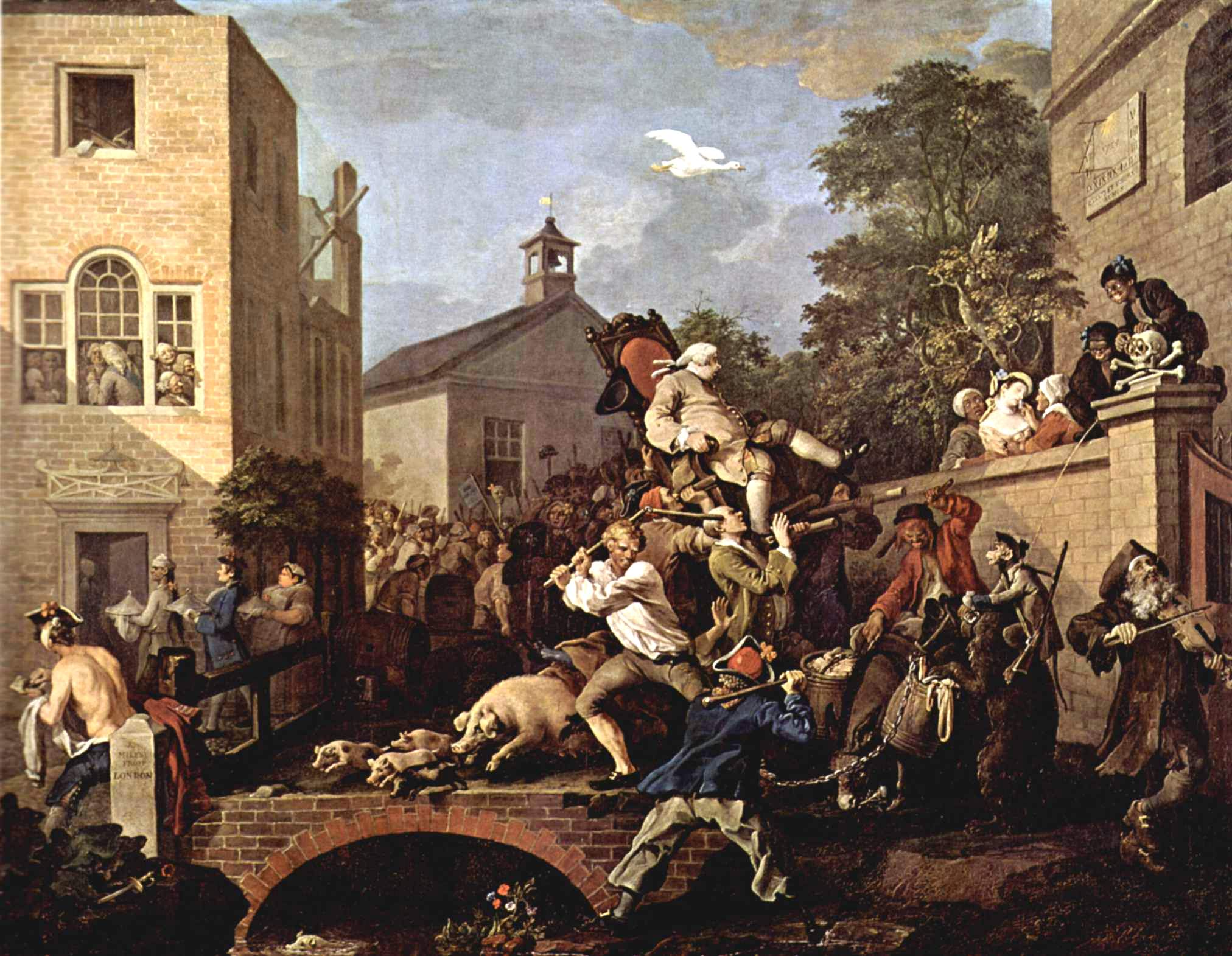
Vox Populi, Vox Deorum: Elections in ASOIAF, Part I

Vox Populi, Vox Deorum: Elections in ASOIAF, Part I

Image result for the hustings goarth

Introduction:

As a historian, one of the steepest hurdles and most fascinating mysteries I deal with is how to overcome the gap in patterns of thought between the past and the present that have convinced so many that “the past is a foreign country.” So many beliefs and attitudes that we today consider to be universal human characteristics or values turn out to be bounded by culture and epoch, so…

View On WordPress

We know that unified Westeros has a pretty sophisticated royal bureaucracy, given the medieval setting, but I was wondering if you had any guestimates about how many clerks we could be talking about in the capital proper. The Master of Coin needs staff big enough to keep track of the reports and accounts of the gods know how many harbormasters, tax farmers, customs sergeants, wool factors, toll collectors, pursers and wine factors spread over a country the size of a continent.

I would urge some caution as to how sophisticated the Iron Throne’s bureaucracy is. As I’ve written about before, Westeros’ royal government is wildly uneven, with a relatively active fiscal bureaucracy but an almost non-existent judicial bureaucracy.

It’s also not clear how developed the financial bureaucracy is, because there’s a weird cross-fertilization between Littlefinger’s own criminal empire and the royal government. For example, wool and wine “factors” are not civil servants, but private traders who buy and sell on commission. Likewise, tax farmers are generally a sign of weak financial bureaucracies, as they’re essentially privatized tax collectors. 

Notably, most of the legit civil servants we see are related to ports: harbormasters, customs sergants, etc. This suggests a bureaucracy largely focused on enforcing and collecting tariffs and excise taxes, which allows you to collect taxes with a much smaller workforce, since you only need to cover ports rather than trying to collect taxes from vast swathes of rural territory. If we go by medieval England, the New Customs Act of 1275 required that each port had to have two collectors and one controller – as Westeros has five cities and about twelve or so towns which are clearly ports, I would guess that you’re talking about 50-100 men across the kingdom.