Astronomy is one of those weird areas in which Westeros’ uneven technological development puts them ahead of schedule: the maesters observe the heavens with telescopes manufactured in Myr, they know the Seven Wanderers are in fact planets, they have a heliocentric model of the universe, they are quite good at tracking comets, and they are good at using the stars to help predict the changing of the seasons.
Author: stevenattewell
This may sound like an odd question but are there any ASOIAF parodies you really like?
Hardcore Game of Thrones cracks me up both as a fan of Hardcore History and ASOIAF, School of Thrones is a great genre mashup, I’m sure there’s some others I can’t think of atm.
Are tournament prizes just money or can they be other things?
They usually weren’t cash, usually they were some sort of jewelry or gilded cup or plate or the like.
In your opinion, what kind of Lord of the Iron Islands would (pre-Reek) Theon be?
A pretty lousy one, tbh.
In feudal societies like Westeros, why is romantic love, well, romanticized to the extent that it is when the system is built on political marriage? Wouldn’t the idea of marrying for love be stigmatized to a greater extent?
Well, in feudal societies romance isn’t linked to marriage. In Lancelot and Guinevere, Tristan and Isolde, and all of the “courtly love” formulas that flowed out from them, the central figures are a (usually unmarried) knight and a married or otherwise unavailable lady, love from afar is valorized as pure and noble whereas consummation leads to death and dishonor. In this way, the potential threat that romantic desire poses to arranged marriages is contained.
In this context, marriage for love is also a threat to the social order, because it tends to involve broken betrothals, inappropriate matches, and subsequent poverty and loss of estate. Hence why there was an emphasis on intense passion as dangerous – thus why so many famous love stories involve the lovers dying rather than living happily ever after – whereas contentment and stability are praised as harmonious.
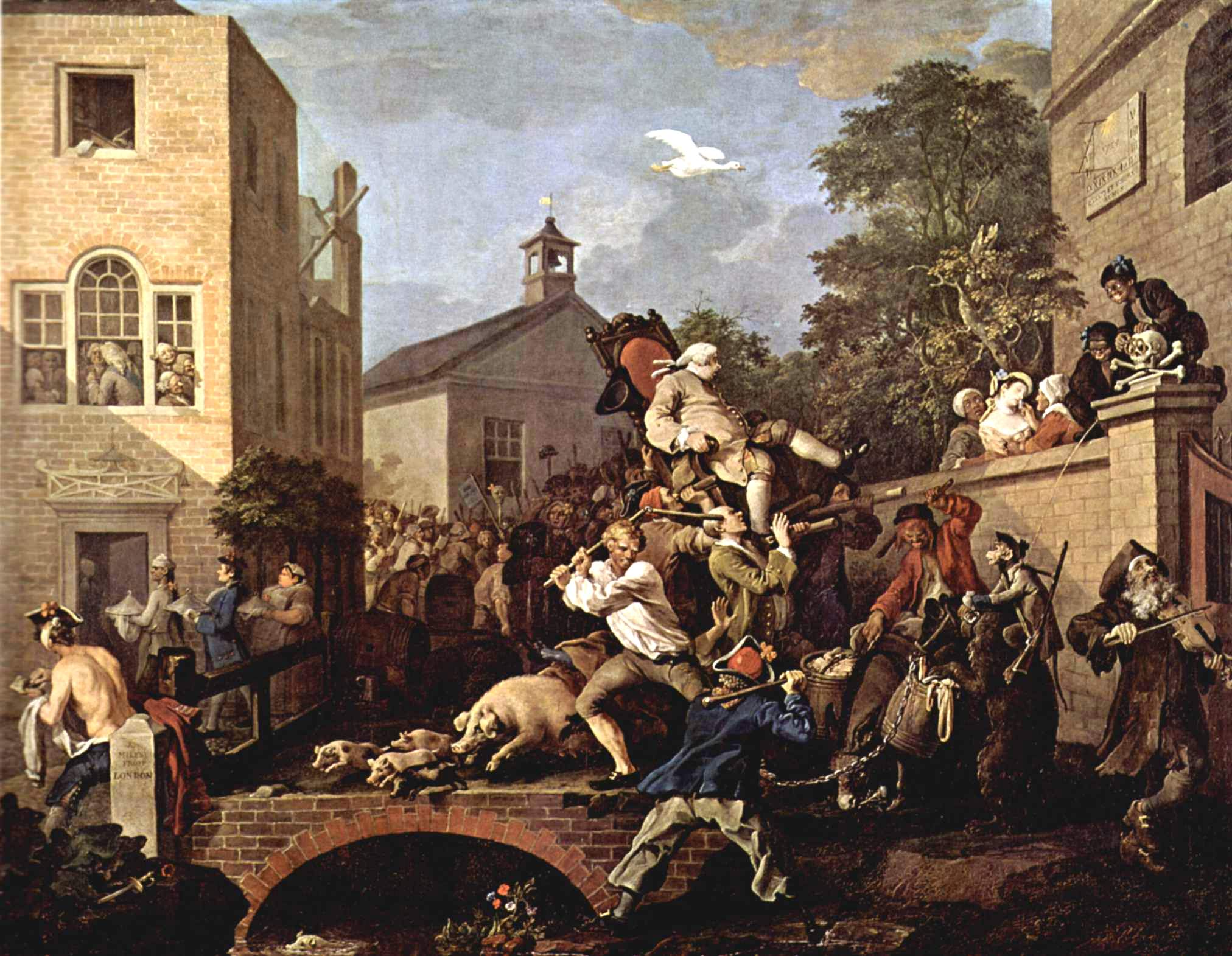
Vox Populi, Vox Deorum: Elections in ASOIAF, Part I
Vox Populi, Vox Deorum: Elections in ASOIAF, Part I
Introduction:
As a historian, one of the steepest hurdles and most fascinating mysteries I deal with is how to overcome the gap in patterns of thought between the past and the present that have convinced so many that “the past is a foreign country.” So many beliefs and attitudes that we today consider to be universal human characteristics or values turn out to be bounded by culture and epoch, so…
How far away is Westeros from an Agricultural Revolution?
Holding rates of technological change constant to make calculating easy, I would say around 200-300 years. Crop yield growth rates in the early 15th century were quite slow (.08% per year) and only picked up steam in the second half of the 17th century.
If Renly had gotten Margaery pregnant what do you think the Tyrells would do after his death?
I think I answered this in a chapter-by-chapter essay on Catelyn II of ACOK.
How did the Darrys come to be such ardent Targaryen loyalists?
Well, the Darrys have been Targaryen loyalists for some time. They got a lot of Harroway lands from King Maegor, they backed the blacks in the Dance and suffered horrible losses, they fought for Daeron II (hence the business with the Clanking Dragon Inn), the Demon of Darry became Lord Commander of the Kingsguard, and in the reign of Aerys II Ser Willem Darry was made master-of-arms at the Red Keep and his brother Ser Jonothor Darry was made a member of the Kingsguard, and three Darry brothers including Ser Jonothor died at the Trident.
So it’s a combination of past rewards (remember the hiddden tapestries) and past sufferings.
Beyond the Doylist explanation that GRRM wanted to introduce his readers to as much of his setting as soon as possible and the simplest way to do this is to have the characters go on a road trip, why would Robert and his entourage travel to Winterfell and back by land rather than sailing to up the White Knife and back via White Harbour like Cat later did?
Well, keep in mind Robert’s objective wasn’t to travel to Winterfell as fast as possible. Instead, Robert’s trip to Winterfell was a royal progress, where the point is to dazzle your subjects with the splendor of the king’s person, to dispense justice and renew the social contract, to renew the personal connections between the nobility and the monarch, and occasionally to gently bankrupt the politically suspect nobles by making them pay for everything.
In this case, it’s a good opportunity for Robert to show himself to the Riverlanders, both the ones who supported him during the Rebellion, and the ones who didn’t. There is a reason he stays at Castle Darry.
 RFTIT Tumblr Backup