Mix of both and Robert Baratheon.
Author: stevenattewell
So…which ship for All-New X-Men, Cyx-23 or Larren?
I did not know Cyx-23 was a thing.
What do you think of Evan Sabahnur/Kid Apocalypse? He’s been given a fair amount of character development in X-Force, is buddies with Deadpool, and raises some interesting questions about nature vs. nurture. On one hand, when they came up with him, it seemed like he’d be a fulcrum sort of character, on the other hand, he’s been relegated to background “Mr. Fantastic clone #X” in All-New X-Men, with Apocalypse Wars being a major disappointment.
I’m not going to defend Apocalypse Wars, I thought that was a huge whiff, but I kind of like him in All-New X-Men, what with the designer sneaker connection and trying to be Iceman’s wingman.
How does an imperial crown differ from a regular crown?
Glad you asked!
An imperial crown is closed, comme ca:

The loops of metal over the top, the globe on top, all of these things signify an imperial crown. The symbolic meaning is that the wearer recognized no authority beyond them (save God) – more on this in a second.
By contrast, a merely royal crown is an open circlet or diadem, comme ca:

Not to say that royal crowns – like this one, the famed Iron Crown of Lombardy used by Charlesmagne and Napoleon – couldn’t be fancy or important, but they didn’t have the symbolism of imperial rule.
Why is this symbolism relevant? Well, when England split from the Catholic Church under Henry VIII, part of the legal justification that Thomas Cromwell put together for the Act in Restraint of Appeals was that:
“Where by divers sundry old authentic histories and chronicles it is manifestly declared and expressed that this realm of England is an empire, and so hath been accepted in the world, governed by one supreme head and king, having the dignity and royal estate of the imperial crown of the same.”
Now, keep in mind that some of these “divers sundry old authentic histories” counted Brutus of Troy and King Arthur as examples of British imperial dignity, but Cromwell could point to Henry IV and Henry V, who both were crowned with an imperial crown (probably as an attempt to shore up their authority given the whole business with Richard II), as proof that England had previously claimed independence from the Pope in Rome.
I have been thinking. About ASOIAF, and headcanons, and septs.
GRRM establishes Oldtown in the Reach as the centre of Seven-based religious life…but for somewhere as big as Westeros is, that doesn’t work. Even for somewhere the size of ENGLAND, it’s iffy to have just one or two (counting the Great Sept in Kings Landing later) key sites. There should be a Golden Sept in Lannisport, at least, because no WAY is the Westerlands letting the Reach get all the glory. A Sept of
the Sky in the Vale to play off the
knowledge that this is where the Andals and their weirdo new faith made their first mark. DEFINITELY
something in Dorne, probably very unique given the syncretic nature of
Dornish life – there’s real blurring between “THE Mother” and “Mother
Rhoyne”, and depictions of the Seven there probably have her as a
water-bearer.The kingdoms pre-Conquest were at each other’s throats so much; the
Reach being able to say “well, guess what, we’re closing the way and
we’re not gonna let your pilgrims through to Oldtown!” is a huge thing.
Pilgrims would potentially be a great source of income in any case, with
road tolls and needing accommodation/food every step of the way and
wanting to buy something to show they’d been on this spiritual journey
to the holy site. Why would the other kingdoms who did Seven-things NOT
want some of that action?So, on that note, it’s time for some Rampant Uncontrollable Worldbuilding Only Dimly Related to Canon, which is my very favourite kind. This round is going to be all about septs – how they’re used, what they look like, and how that’s different from place to place.
Fellow ASOIAF-lings – @dknc3, @cosmonauthill, @indigoraysoflight, @mightyisobel et al, I may be looking at you – are welcome to tell me I’m a dumb-dumb, expand things or whatever you like. I’d love to know your thoughts.
So, here we go.
Dorne
As I said, Dorne’s got some serious syncretism going on in its art.
That, more than the architecture, is what stands out. The Mother is blurred an awful lot into
Mother Rhoyne, with a baby at the breast (either held or swaddled in a
sling across her chest…or she may be bare-breasted, which is something
no other kingdom would depict here, and something most of them find a bit scandalous!) and a jar of water balanced on her
head with the other hand. The Warrior’s always shown mounted – a sandsteed, naturally; they’re
extraordinarily good at creating lifelike horses – in scales and holding
a long spear/javelin. He’s not just a warrior, he’s a Dornishman, explicitly so. The Father probably has a turtle somewhere in his iconography – he may be standing on a turtle’s back, symbolically getting a boost from the Old Man of the River?The Reach
The Starry Sept is absolutely and indisputably a Gothic cathedral, drowning in light. Think Barcelona, think Reims.
High vaulted ceilings, huge windows, stained glass in a riot of
colours. Stonework will be intricate, with floral and animal (mostly
birds, I want to say?) motifs everywhere, and some of the gargoyles are weird.Smaller septs have stained glass too, if they can afford it. Those
that can’t afford glass still have big windows and wide doors that can
be thrown open to let the light in; they’re limewashed so they’re smooth
and white, and villagers bring cut flowers in.These things carry across a bit to the depictions of the gods
themselves. The Maiden wears a flower crown, either sculpted into her head or an actual wreath that someone puts there according to how detailed the statue is. The Father…can sometimes
be oddly animalistic. Not so much in the Starry Sept itself (he’s just a
tall bearded man in the “official” one) but sometimes, in
little village septs, you’ll find a version of his face that has antlers
like Garth Greenhand, and no one can really verbalise why…No, really. They can’t. Sometimes the Father has antlers, and that’s just how it is.
The Riverlands
Limewashing the walls continues as you go north into the riverlands, but they do something reachmen don’t. They paint their gods on those walls.
Not everywhere – there are sections left bare – but over the door, and
behind each altar, is murals all the way. This is an English thing in
the real world, usually referred to as a doom painting. This one has darkened a lot with age, so imagine much clearer, brighter colours. Catelyn’s sept at Winterfell also has a little of this, because of course
her sept is built to a familiar pattern from home; the limewashed
exterior looks very weird and raw when her sept is built, but over years
the white softens and it becomes part of the general background.I also think there are aspects of Irish design in the riverlands, but
I can’t quite pin it down. The flowing lines of Insular/Hiberno-Saxon art (of which in our world the Ur-example is Celtic crosses and stuff like the Book of Kells)
recall the rivers, and they tend to use rounded Roman arches (and thus
have smaller buildings, thicker walls, somewhat smaller windows) compared to the Reach.
The Westerlands
The southern edge of the westerlands takes from the Reach and likes
stained glass, and there’s some bleed-over from the riverlands too on
that eastern border, but as you get further and further in they get more and
more crazily Byzantine, because I’m really fucking attached to my
Byzantine Westerlands. Usually pale/sandy stone, domed
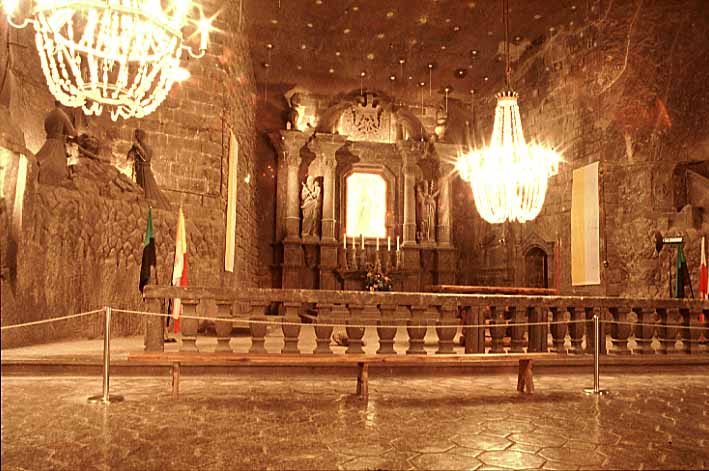
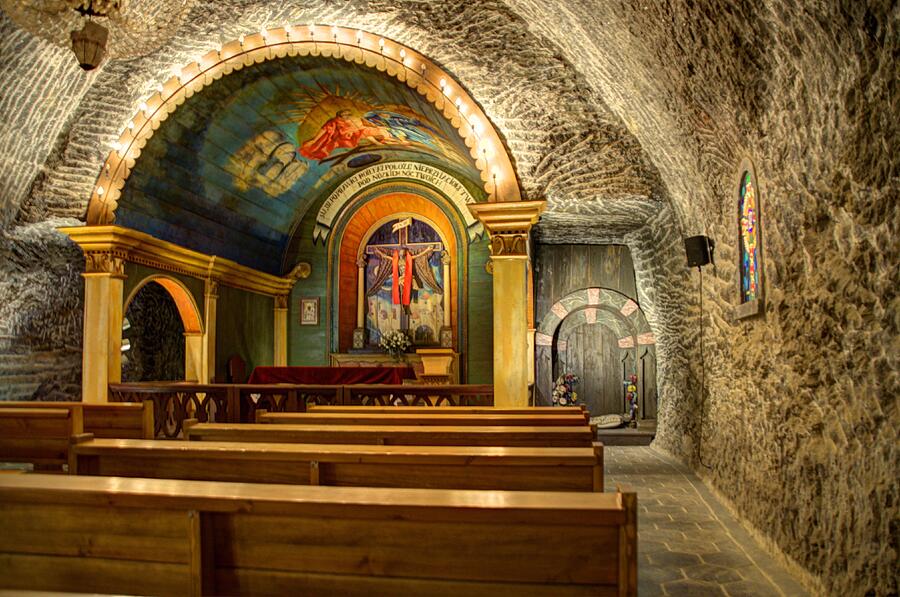
roofs…and the inside is a blaze of shining golden icons. This blaze is mostly candlelight, as except on the Reach border windows tend to be quite small and aren’t a major design feature.Some westerlands septs have no windows at all; they’re almost (or are entirely) underground, set into caves or mines in the hills. Casterly Rock’s personal sept is underground like this, and has a few minor callbacks to the Wieliczka salt mines in Poland.
I’m still working on the rest. I don’t have a lot for the Stormlands in
general (though I DO think they have the most ornate statues, in
beautifully carved and polished wood) and the few septs of the North and Iron Islands
present unique challenges because the Faith of the Seven is an
interloper there.…
I have absolutely no idea how the Manderleys would combine Reach aesthetic (those
big windows) with the practical need to keep the cold out!
RE: Kingdom vs Empire
Does that mean westeros is full of empires more than kingdoms?
Nymeria’s conquest of dorne led to a polity composed of multiple ethnic groups and cultures, there is the first men, andal, and rhoynar or the division between, stony, salty, and sandy dornish. That seems to be an empire.
Likewise, the Gardners realm was said to be made of four seperate kingdoms (arbor, hightower, marches, and reach proper).
The North has the mountain clans, the ‘regular’ northmen, skaggos, the craggomen, and the southerns from the manderlys.
The vale, has the andals and andalized first men, the mountain clans (though they are rebels) and the sistermen.
The riverlands has two different religious groups.
And thats not even mentioning the stormlander and both ironborn empires.
Plus of course the Targaryen realm.
Also, I find that many people, including myself, have this perception or disposition to think or view empires as somehow ‘better’ in someway than kingdoms (though definetely not necessarily morally better). Would you care to comment on this belief and how it holds up to scrutiny?
To answer your last question first, I don’t see why empires would be considered “better” than kingdoms. They’re not more efficient or effective as political structures – the sheer coordination issues that crop up in empires alone – they don’t lead to more political stability or internal peace, etc. etc.
I would push back a bit on your descriptions above:
- Nymeria could have been said to have conquered an empire, if she and her dynasty hadn’t made it a central policy to eradicate all differences between her subjects in the name of creating a common Dornish identity.
- The Gardeners might have been considered Emperors if they had left the Kings in place instead of absorbing them into one Reach.
- The North’s divisions don’t come close enough to constituting different nations – with the exception of the Manderlys, they’re all First Men, they all worship the Old Gods, etc.
- The Vale either forcibly assimilated or excluded the First Men from the polity, so they don’t reconize multiple peoples.
- Two religious groups in the Riverlands isn’t enough to distinguish two “nations” in the sense of peoples, not without a lot more religious division on the level of the Thirty Years War.
What you could say is that, by claiming to be the “King of the Andals, the First Men, and the Rhoynar,” Aegon implicitly claimed an empire in Westeros, although hasn’t used the title (or indeed an imperial crown).
But how would pre serum steve beat hydra cap? that’s… literally impossible

My good blade carves the casques of men,
My tough lance thrusteth sure,
My strength is as the strength of ten,
Because my heart is pure. (lines 1–4)
Steve Rogers didn’t need the serum to become a hero, he always was a hero.
What do you think it will take to repair Steve Roger’s character from the blemish of being a nazi? From what I can tell, Marvel thinks that because its Kobik’s and Red Skull’s fault, it doesn’t permanently affect Steve Roger’s image and realCap’s integrity will automatically be restored when hydraCap is gone.
I had a thought about this, because I think Marvel is wrong about that. You can’t spend two years with HydraCap being the status quo without that having a substantial effect on the character (my problem with that started with Issue #1 where HydraCap murders a superhero – if that doesn’t have consequences, your writing is bad, because murder should have consequences).
So I had an idea about how to end “Secret Empire” (which, btw, that title is beyond annoying given the way that Nick Spencer has been trying to have it both ways re: HYDRA as a Nazi organization. Hey Nick, we know where that term comes from!):
My idea is that one of Steve’s friends – Sam Wilson, Bucky, etc. – is really devastated about the way that the revelation of Steve being a HYDRA agent has destroyed his reputation and the public’s faith in what he represented, and they decide to go to the X-Mansion and talk to Beast about using his time machine…Thus, when the big showdown between HydraCap and the good guys happens, at some dramatic moment, HydraCap throws his shield at a hero…and thus guy catches it:

That’s right, it’s 1940 Steve Rogers – drawn like Chris Evans pre-serum, given the mindset of who Steve Rogers would have been – and he proceeds to beat the living hell out of HydraCap, because that’s how Steve Rogers deals with fascists.
And then the new status quo is young Steve Rogers being a hero without the serum (at least to start with), and I dunno, hanging out with the Time-Displaced Young X-Men over in X-Men Blue.
There seems to be a greater focus on ecstatic behavior in the worship of R’hllor than in other prominent religions in ASOIAF. Is this based on any real life ancient religion or closer to modern day fundamentalist christian sentiment and cults? Or is it simply a progression of pyromania to pyrophilia?
GRRM has said that R’hllorism is based on Zoroastrianism and Manicheanism.
I Have Been Put Forward For a Hugo
So it turns out that I’ve been put forward for a Hugo by Abigail Nussbaum, who writes a lot of excellent stuff on sci-fi and fantasy, for my…
 RFTIT Tumblr Backup