Melisandre nodded solemnly, as if she had taken his words to heart, but this Weeper did not matter. None of his free folk mattered. They were a lost people, a doomed people, destined to vanish from the earth, as the children of the forest had vanished.
Do those thoughts seem disturbing given she is essentially saying regarding the wildlings that their lives don’t matter?
I think there’s two ways to interpret this passage.
The first way starts with the fact that Melisandre’s brand of religious devotion is intensely Millennialist and prophetic in nature – as far as she’s concerned, the Final Battle between Azor Ahai Reborn and the Great Other is at hand as the prophecies have foretold, and the entire world faces apocalypse unless it unites behind her god and his chosen champion. This is part of the reason why Melisandre is the most misunderstood character in ASOIAF – she doesn’t sacrifice people or burn weirwoods because she’s actively malicious, she genuinely thinks that what she is doing is necessary for the salvation of humanity, and like Varys she’s a hardcore consequentialist. A truly just woman is no less to be feared than her male counterpart.
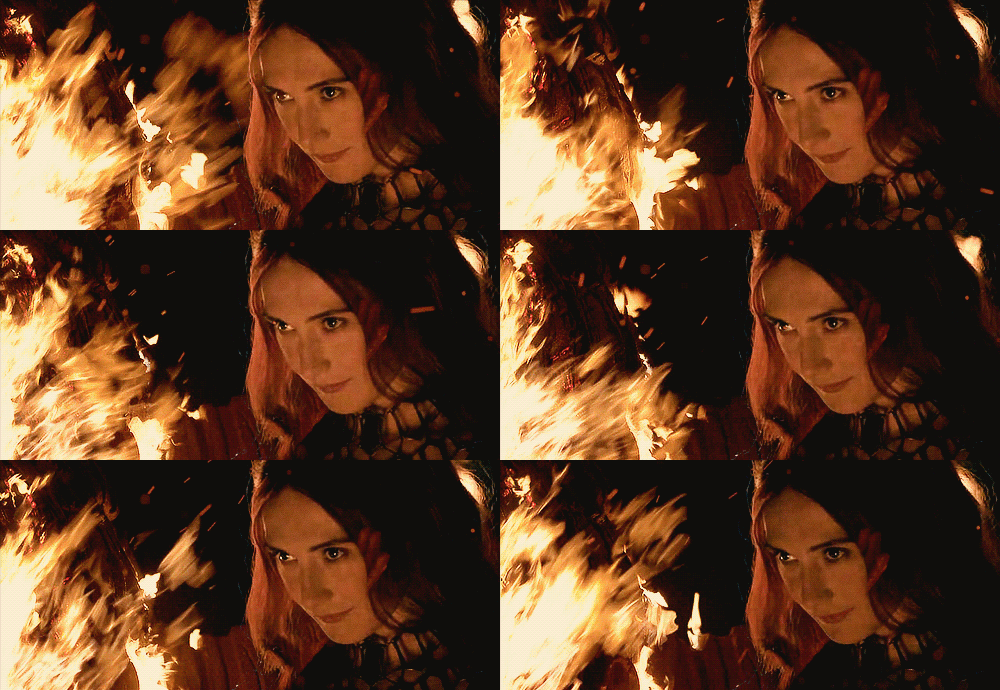
In this reading, Melisandre views the wildlings as doomed by fate to be casualties in the coming war – these dead-ender wildlings who insist on staying north of the Wall have placed themselves right in the path of the Army of the Dead. And her view is helped by the fact that these wildlings have rejected both the true god and his champion, who are the only path to salvation.
The second way of reading has to do with her attitude of cultural superiority. Remember, Essosi consider Westerosi to be barbarians only recently raised to semi-civilization by the last remnants of the Valyrian Empire. Melisandre, as someone raised in one of the most ancient cities of Essos, probably shares this view, given that she is also a missionary bringing the true religion to the heathen.
Now think what someone like that would think of a people that even Westerosi consider barbarians and savages. One of the things I actually really like about ASOIAF is that GRRM shows his main POV characters reacting to the widllings or the mountain clans as people from their backgrounds would react: Tyrion considers the mountain clans’ devotion to democracy and gender equality to be signs of backwardness and part of his plan for using them to take the Vale is to educate them in civilized ways, like obedience to a king. Jon Snow comes to empathize with the wildlings’ desire for freedom and their attachment to their cultural heritage, but he also thinks that these same qualities will doom them on the battlefield.

In this reading, Melisandre is expressing the softer side of Manifest Destiny doctrine – as opposed to the harsher side, which presented native peoples as dangerous threats, this view said that native peoples were “destined to vanish from the earth” as the progress of Western Civilization eventually overtook them. Indeed, the very trope of the Noble Savage was premised on the idea that this fate was inevitable, but now interpreted as a tragedy that could be safely lamented. So in Melisandre’s eyes, the wildlings have rejected enlightenment in favor of clinging to superstion and will thus be swept away by the force of history.
So which is it? Take your pick.

 RFTIT Tumblr Backup