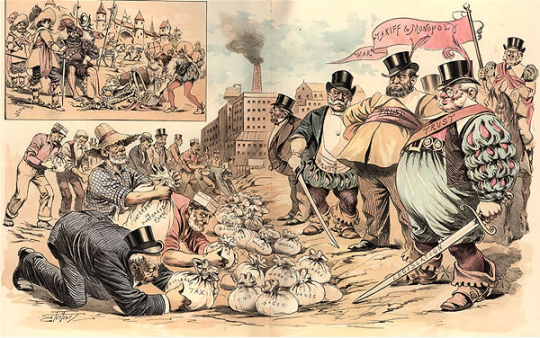
After I did this post, @joannalannister asked if I could do a similar set of estimates for the other Great Houses, so I figured I might as well knock them out.
So what are the incomes of the .01% of Westeros?

House Lannister
Now, this is the one where I have to admit I may have under-estimated in the past. I had previously estimated that the Lannisters earn at least a million a year based on their lending to the Crown, but my population-based methodology put the Starks easily at or above that level, so I definitely need to do a rethink.
Given that the Westerlands have a population of around 4.5-5.5 million (depending on which estimate you use), the GDI of the Westerlands would be around 13.5-27.5 million dragons a year if we use the average peasant income. (Which would suggest a Lannister income from taxes alone of 1.3-2.75 million a year…)
However, we know from the text that the Westerlands have an unusually high GDI per-capita due to their vast mineral resources, high levels of urbanization, and high levels of human capital in their skilled artisans. So I would start at the upper range and add on perhaps another third to half, suggesting that their GDI is somewhere around 35-41 million dragons.
This would place House Lannister’s revenue at 3.5 to 4.1 million dragons a year, more than three times as much as House Stark – which would fit the Lannisters’ reputation for ostentatious luxury and the Starks’ reputation for spartan austerity.

House Arryn
I’m actually working on my essay on the politics of the Vale right now, but all evidence points to the Arryns being on the high side of average: we hear that “The Vale of Arryn—a long, wide, fertile valley entirely ringed by the great grey-green peaks of the mighty Mountains of the Moon—is as rich as it is beautiful,” and that “though the Vale itself is famously fertile, it is small compared to the domains of other kings (and even some great lords)…Trade is therefore of paramount importance to the rulers of the Vale.”
So I would put their per-capita income on the high-side of average, but this is offset by their lower population. Given a population of 3-3.5 million, the GDI of the Vale is probably around 15 to 17.5 million a year. This would bring in 1.5-1.75 million a year, but Gulltown’s port incomes probably brings it up to 2-odd million a year – substantially higher than the Starks despite having a roughly equivalent population, but significantly below that of the Lannisters due to their low population.
But as I’m sure the Arryns would be the first to tell you, money can’t buy good manners…

House Tully
House Tully is a fascinating case in how failed governance can waste the advantages of nature. Given that the Riverlands are “rich and fertile…the waters of the Trident make the lands ripe for settlement, farming, and conquest, whilst the river’s three branches stimulate trade and travel during peacetime,” the region’s 4 million inhabitants should produce a GDI of around 20 million dragons a year (taking the high average of peasant income), producing tax revenue of around 2 million dragons a year.
However, whether it’s due to underdevelopment or the weak grasp of the Tullys on their subjects, their actual army size compared to their potential army size suggests that they only have an income of 1 million dragons a year. Obviously in comparison to ordinary smallfolk, this is a staggering sum, but in comparison to their neighbors to the west and to the east, you can see why the Riverlands have struggled to maintain their independence.

House Greyjoy
These estimates are all rather crude, but this is especially true for the Ironborn, since so little of their income is generated by the Iron Islands themselves, and so much of their income is generated from reaving, which makes it very very “off the books.”
However, based on their poor soil and downright Dickensian levels of squalor, I would say that the Iron Islands population produces perhaps 4.5 million dragons a year in GDI, which means the Greyjoys earn only 450,000 dragons a year in “legitimate income.” No wonder they turn to piracy to make up the difference.

House Tyrell
As has been said repeatedly, House Tyrell’s incomes likely fluctuate depending on the price of foodstuffs, given that the Reach is the breadbasket of Westeros. It’s also home to one of the oldest and largest cities in Westeros, and more towns and villages per capita than any other kingdom in Westeros, so you have to add that into the equation. As a result, it’s also the most populous region in all of Westeros.
Add all of these factors together, and you should adjust upwards from the initial projection of 60 million dragons a year in GDI. For consistency’s sake, let’s take the lower bound of the Lannister adjustment, and say that the Reach produces 78 million dragons a year in GDI.
This would suggest that the Tyrells have a yearly tax revenue of around 7.8 million dragons, almost twice what the Lannisters do. However, a few factors probably reduce that somewhat – first, the Tyrell revenues are probably less liquid than those of House Lannister, with much and more being held “in kind” as grain; second, the Tyrells don’t have additional income from Casterly Rock, which is no small factor.
All the same, no wonder they can afford a political strategy of bread and circuses for the people of King’s Landing…

House Baratheon
Given that the Stormlands are notoriously “thinly-peopled,” subject to poor weather for growing cereal grains, and rather under-urbanized compared to other regions, I would peg the Stormlands at the lower end of Westerosi per-capita incomes. This in turn suggests a GDI of around 7.5 million dragons a year, which is only a little bit above that of the North – which makes sense when you consider that the North has about 10,000 more men under arms despite the Stormlands having much better weather (relatively speaking).
This would put House Baratheon’s incomes at only 750,000 dragons a year, making them among the poorer Great Houses of Westeros. And that’s a hell of a step down from where they used to be, consider that the Stormlands once owned the Crownlands and the Riverlands, which would have made them richer by many times over.
How the mighty have fallen.

House Martell
House Martell is a difficult calculation indeed – Dorne is also thinly peopled, and much of its land is not arable. On the other hand, Dorne also has an unusual level of manufacturing and many high-valuable export commodities, which compensate for its desert climate.
Adding those two factors together, I’d put them around the middle for per-capita income, which suggests a GDI of around 10 million dragons a year – richer than the Stormlands largely due to trade and manufacturing, substanially poorer than the Vale despite roughly equal populations due to the Vale’s legendary fertilty, and way below the Reach or the Westerlands.
This is turn makes for an tax revenue of around 1 million a year, putting them roughly in the middle of the pack.

 RFTIT Tumblr Backup